Bunk beds are a very practical solution for saving space in children's rooms, especially in homes where it is difficult to place two separate beds in narrow areas. This way, children can sleep together in the same room and still have space for a table, a floor lamp, low shelves, and some small toy boxes or daily items.
In many homes, like mine, bunk beds become a versatile piece of furniture over the years. My children slept in the bunk bed for four years, until we decided to have separate rooms... and we still haven't disassembled the furniture because occasionally my daughter stays with her brother again. This flexible use is one of the great advantages of bunk beds, especially when combined with good safety measures.
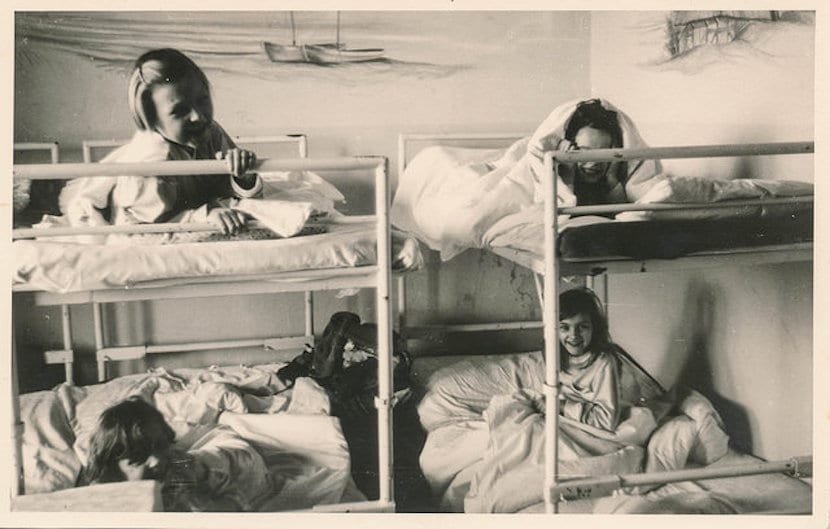
In the past, as reflected in the cover image, safety was not given much thought, but today we know that we need to take very specific measures to prevent falls from the top bunk. If you have ever climbed a bunk bed, you will see that looking down is quite different from the position of an adult standing: it is quite high, and although the statistics are not overwhelming, falls do occur. Additionally, other accidents resulting from poorly designed elements, such as head injuries, risk of suffocation, or entrapment, can also happen.
There are four main types of bunk beds (basic, train, foldable, loft) and in every case, one bed is elevated, so the safety recommendations you will find below apply to all configurations. First of all, when purchasing a new bunk bed, we should check that the product complies with the EN 747-1:2012 standard in its technical file or label; this standard specifies the minimum safety requirements for bunk beds and high beds.
If it is second-hand furniture, we will need to ensure that it is in good condition: materials, joints, screws, welds, the bases of the legs, and the mattress. After bringing the bunk bed home, after disposing of the packaging and extra parts, we will preferably place it in the corner of the room, so that there will be walls on both sides. It is important that the ladder keeps the window away, so that the child sleeping on top does not get into danger while climbing up and down, and there is no desire to look out from the top bunk.
Bunk Beds and Child Accidents
Specific statistics regarding such accidents are not very abundant, but various European sources indicate that bunk beds can cause injuries. According to the European Injury Database, approximately 19,000 children under the age of 14 are treated each year in Europe for injuries occurring from bunk beds. Most often, there are bruises and bumps that can be resolved without major complications, but more serious cases that should be avoided are also recorded.
The most common accidents occur due to children falling from the top bunk; this can happen while sleeping, playing on the top bunk, or using the ladder. Additionally, accidents can occur due to poorly designed guardrails, ladders, or gaps that can cause entrapment of heads, arms, or legs. Situations such as entrapment between the bed and the wall or risk of suffocation or asphyxiation should also be considered if there are strings, ribbons, or decorations within reach of children.
Other less visible risks are related to the structure of the bunk bed: if it is not well assembled, if the mattress is not securely placed, or if the ladder is unstable, situations such as collapse, breaking of boards, or slipping can occur, leading to a fall. Therefore, it is very important that safety starts with the choice of model and continues with periodic maintenance.
There are three key recommendations that we should never overlook to prevent accidents with bunk beds: installing according to the manufacturer's instructions, not allowing children under 6 years old to sleep on the top bunk, and especially protecting outlets located near the ladder or guardrails.
More Tips to Prevent Accidents in Bunk Beds
Assembly, Standards, and Safe Placement
Before opening the bunk bed, it is important to check the area where it will be placed. It is recommended to ensure there is sufficient ceiling height for the child on the upper mattress to sit without hitting the lamp or ceiling, and that the side walls are free from heavy shelves or objects that could fall.
- Assembly According to Instructions: follow the manufacturer's guide step by step, using only the provided parts. Avoid using inappropriate screws or tools, as this can weaken the structure.
- Structure Inspection: after assembly, check for sharp edges, protruding screws, or cracked areas. Ensure it does not move when lateral pressure is applied and check that all connections, screws, and welds are tight and in good condition.
- Compliance with EN 747-1:2012 Standard: check the product label to ensure the bunk bed complies with this European safety standard; this standard regulates issues such as minimum and maximum distances between bars, the height of protective barriers, and the durability of the structure.
- Room Placement: place the bunk bed in a corner where both sides are protected by walls. Keep the access area free from sharp-edged furniture, large toys, scooters, or other objects that could cause harm in case of a fall.
- Distance from Windows and Radiators: the ladder should not be placed next to a window or over radiators or heating devices; this reduces the risk of falling out, burning, or impact.
In addition to the general layout, some specific details make a difference in safety:
- You can place a thick carpet or padded flooring on the ground, especially on the open side of the bunk bed, to provide some cushioning in case of a fall.
- Parallel Spacing of Railings: there should be no gap of more than 7 centimeters between the bars to prevent children from putting their heads or body parts through.
- Safe Ladders: preferably non-slip, with a depth of at least 3 centimeters and approximately 20 centimeters distance between each step. This facilitates children climbing up and down stably.
- Upper Mattress Protection: the railing should be present on all accessible sides around the mattress and should be continuously protected except for the space where the ladder is located.
- Railing Height: to prevent children from rolling out while sleeping, it should be at least 16 centimeters high.
- Height from Ceiling: calculate well to ensure that children do not hit the lamp or ceiling when sitting.
- Dimensions of Upper Gaps: for safety, gaps on the upper mattress should not be smaller than 6 cm and larger than 7.5 cm; this prevents both entrapment and complete body passage.
- Mattress Boards: place these with gaps of no more than 7.5 centimeters and secure them well to the structure, so they do not collapse when the child jumps or moves suddenly.
Mattress Selection and Adjustment
The mattress is another key component in the safety of the bunk bed, but it is sometimes overlooked. It should be of the exact size recommended by the manufacturer, so there are no dangerous gaps or excessive overhangs.
- Perfect Fit: ensure the mattress fits well to the bed frame without leaving gaps at the head, foot, or sides. This prevents the child from getting stuck between the mattress and the structure.
- Mattress Height: the thickness should not exceed the safety height of the railings (approximately 16 centimeters). An excessively high mattress reduces the protective function of the railing.
- Secured Mattress: the mattress should be secured with straps, screwed boards, or a similar system to prevent it from slipping; this way, it will not slide even if the child kicks or jumps on the bed.
- Bedding Condition: avoid deformed or overly soft mattresses; this can cause the body to sink excessively and dangerously approach the top edge of the guardrail.
Age, Child Characteristics, and Top Bunk Usage
The child's age and development directly affect the safety of the bunk bed. In general, the top bunk is not recommended for children under 6 years old. At this age, many children still struggle to move comfortably on narrow ladders, can easily lose their direction when they wake up in the middle of the night, and may make more sudden movements while sleeping.
- Age Restrictions: always follow the recommendation that only children over 6 years old should sleep on the top bunk, especially if the child is restless or very active while sleeping.
- Very Active or Sleepwalking Children: if your child is a sleepwalker, frequently has nightmares, or tends to get up in a disoriented manner, it is preferable for them to stay on the bottom bunk even if they are of age.
- Teaching the Child: take the time to teach them how to climb up and down, which areas they should not climb, and why following these rules is important for their safety.
- Only One Person on Top Bunk: to prevent overloading the structure and reduce pushing and dangerous play, only one person should sleep on the top bunk.
Safety in Daily Use of the Bunk Bed
Once assembled and properly placed, it is important that daily use is consistent with all these preventive measures. Clear rules, supervision, and some small details make a difference.
- Headboard Placement: on the top bunk, the headboard should always be opposite the ladder opening; this way, the child sleeps as far away from the unprotected area as possible.
- Safe Lighting: you can place a light that will help the child on the top bunk get down in the middle of the night, but never leave electrical wires in the structure of the bunk bed. If you cannot make a safe fixed installation (the wall-facing side is better), opt for a battery-operated system that holds well.
- Avoid Dangerous Decorations: do not use decorations, ribbons, decorative cords, or drapes on the bunk bed; as children can get caught in these and risk choking.
- Clear Environment: there should be no dangerous objects around the bunk bed that could cause injury in case of a fall: sharp-cornered furniture, high tables, scooters, hard toys, or electrical devices.
- Only Use the Ladder to Climb Up and Down: show them that the correct way to go up is to use the ladder; emphasize that they should not climb on tables, chairs, or other furniture. This is important for it to become a habit.
- Jumping on Beds is Prohibited: prevent children from jumping or playing push on both the top and bottom bunks. In addition to falls, the mattress boards can break.
- Supervision During Play: do not leave children alone for extended periods in a room with a bunk bed, especially if there are guests or siblings of different ages.
Lighting, Outlets, and Electrical Environment
Night lighting and electrical installations near the bunk bed require special attention. Children may get up half-asleep and get tangled or play with outlets and wires without fully realizing the danger.
- Night Light: install low-intensity lamps or LED night lights that provide sufficient visibility for going down the ladder, but be careful not to dazzle the child while they sleep.
- Cool Bulbs: ensure that lamps near the bunk bed use LED bulbs or other systems that do not heat up; thus, possible contact will not cause burns.
- No Clamp Lamps on the Structure: avoid wired or clamp lamps directly attached to the railing or ladder; as these can loosen, tangle, or leave wires accessible to children.
- Protected Outlets: protect the outlets near the bunk bed with safety covers and keep extension cords and power strips away from areas where children can climb up and down.
Periodic Maintenance and Inspection of the Bunk Bed
Safety does not end on the installation day. Throughout its usage, the bunk bed is exposed to minor loosening, impacts, weight changes, and movements; it is important to monitor these.
- Check Screws and Connections: regularly check that all screws are tight and that there are no loose parts. If you feel squeaking or wobbling when climbing up, reinforce the connection points.
- Ladder Condition: ensure that the ladder is securely fixed and located at the longest part of the bunk bed; this way, the child will not slip while using it.
- Check Railings: check that the railings are straight, without deformation, and that there is an appropriate distance between the bars. As the child grows, ensure that the safety barriers are always in place.
- Mattress and Boards: check if any board is bent, broken, or loose. Replace or repair immediately; this way, the bed will not sag unevenly.
- Cleaning and Maintenance: keeping the bunk bed clean, free from dust and small toy remnants, helps to detect potential damages in a timely manner.
Your children can also help prevent these accidents when they participate in the maintenance of their beds and understand the rules. Calmly explain that the bunk bed is a furniture for sleeping and resting, not a playground, and together you can ensure that it is a comfortable, fun, and very safe place.
With the right model selection, proper installation, age-appropriate supervision, and clear usage rules, bunk beds can continue to be an ideal resource for gaining space in the children's room and ensuring that siblings stay in the same room; thus promoting their closeness without compromising the peace of adults.
Images — simpleinsomnia, WikimediaCommons.

































Comments
(5 Comments)