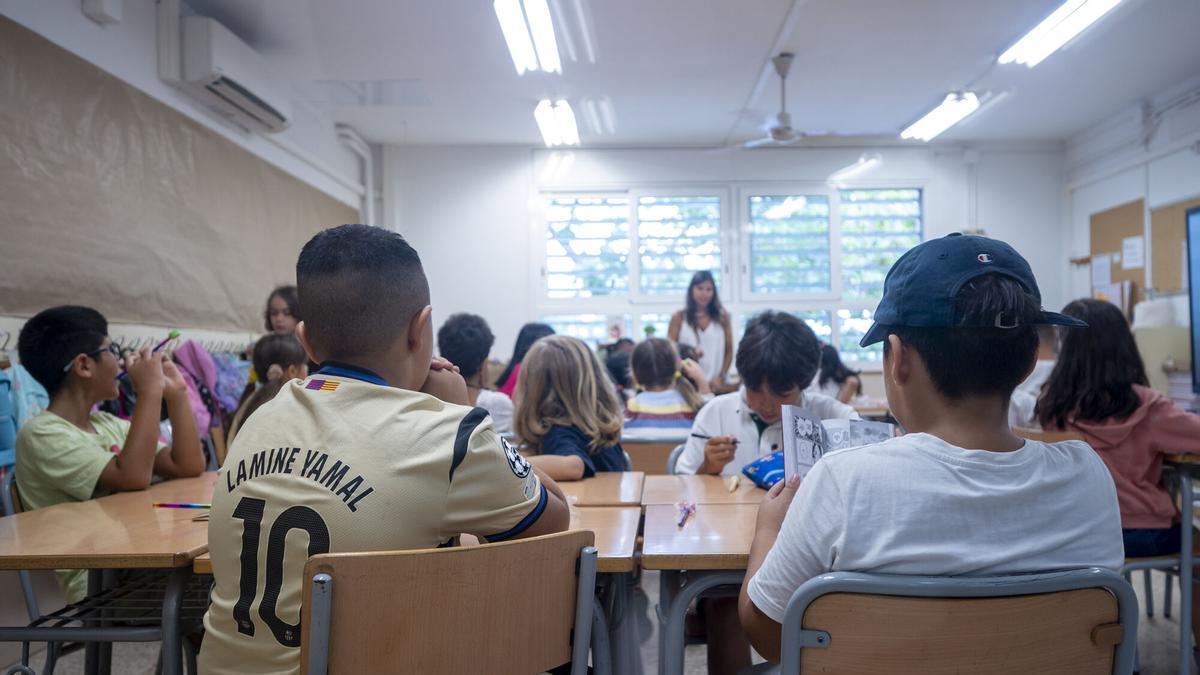
A new study conducted by the "la Caixa" Foundation Social Observatory focuses on the emotional distress of many children with neurodevelopmental disorders in Spain, particularly highlighting the situation of girls. The results show that these children are more likely to experience depression, anxiety, aggression, and very fragile self-esteem compared to their peers who do not have a diagnosis.
The research does not only focus on children: it also examines how this situation affects families; families describe a feeling of not having enough tools to accompany their children and a strong emotional burden. The study emphasizes that the psychological impact extends to the child's environment, especially to the mothers who take on a large part of the caregiving.
A Pioneering Study on Emotional Well-Being in Children with NDD
The report titled “Emotional Well-Being and Families of Children with Neurodevelopmental Disorders” was prepared by Mari Aguilera (University of Barcelona) and Nadia Ahufinger (Open University of Catalonia). The study was conducted in collaboration with the Catalonia Dyslexia Association (ACD) and the Catalonia Association of Families with Learning Difficulties (AFDACAT).
In total, approximately 300 Catalan families participated in the study with their children aged between 6 and 12; both those with and without a diagnosis of neurodevelopmental disorders. The disorders examined include language development disorder (TDL), dyslexia, dyscalculia, and attention deficit hyperactivity disorder (ADHD); these disorders represent a significant portion of learning difficulties in childhood.
The researchers explain that this initiative emerged in the context of the increase in mental health issues identified post-pandemic. There were signs that the incidence and prevalence of mental disorders in children were rising, but there was almost no solid data on how children and families with NDD experienced this situation.
Therefore, the study was designed with two main objectives: to understand the level of emotional pain experienced by these children and to analyze the emotional state of their families. The authors emphasize that this approach is innovative; as in most previous research, families are only seen as informants, not as actors whose well-being is central.
Increased Emotional Pain and Fragile Self-Esteem
The results show that children with neurodevelopmental disorders are more likely to experience emotional pain compared to their peers without a diagnosis. This distress manifests as depression, anxiety, aggressive behaviors, and very fragile self-esteem; this situation affects both academic success and social relationships.
The researchers state that difficulties in reading, calculation, attention, or language should not lead to emotional problems on their own. However, in practice, daily life in the classroom and other social environments creates a significant psychological impact: if a child takes much longer than others to complete a reading or cannot understand a text with the same ease, they are constantly compared to others, which undermines their self-confidence.
This daily wear and tear causes many children with NDD to constantly question why they cannot perform like their peers. In many cases, before diagnosis, they live with a feeling of “not being able to keep up” and face a situation where they do not understand what is wrong; according to the study, this can last for years and leave a mark on their emotional well-being.
The research also identifies an increase in conflicts with peers and difficulties in social integration. Some children prefer to avoid situations where their difficulties may become visible or stay in the background due to fear of making mistakes and being judged; this can increase loneliness and internal discomfort.
High Comorbidity: Many Children Experience Multiple Disorders
One of the significant contributions of the study is the joint analysis of four developmental areas: reading, calculation, verbal language, and attention-behavior. By observing these dimensions in an integrated manner, the researchers have identified high comorbidity; that is, the presence of multiple neurodevelopmental disorders in the same child.
According to the data, nearly half of children with TND exhibit two or more disorders simultaneously. For example, it is common for a child with dyslexia to also have a TDL, or dyslexia and dyscalculia can occur together. The accumulation of these difficulties is not an exception but a quite prevalent situation among the participants in the study.
Comorbidity makes daily life even more challenging for these children: the more disorders there are, the more severe the emotional distress. Attention issues combine with difficulties in reading or comprehension; this is further compounded by challenges in calculation or verbal expression, creating a scenario that requires constant additional effort in school and social environments. The authors emphasize that this complex reality must be taken into account by educational and health systems. According to them, it is not sufficient to address a diagnosis in isolation; it is necessary to evaluate the entirety of overlapping difficulties and adapt interventions that will respond to this broader needs profile.
Girls Are Particularly Sensitive to Emotional Impact
The study presents a data point that particularly concerns researchers: emotional impact is more severe in girls with neurodevelopmental disorders; especially in cases of comorbidity. This group exhibits higher levels of anxiety, depression, and somatization symptoms, along with observed rule-breaking behaviors.
One of the hypotheses proposed by the authors is that many girls tend to hide their difficulties to conform to social expectations. In other words, they exert extra effort to avoid being in the spotlight, meet the expectations placed upon them, and not publicly display their issues related to reading, numbers, or language.
This constant effort can intensify their emotional pain. While appearing “compliant” from the outside, they struggle internally with the pressure to perform like others, the shame felt in the face of potential mistakes, and the fear of judgment from peers and the adults they look up to.
The situation of some young participants in the study reflects this dynamic well: due to the fear of judgment, they prefer to become almost invisible in the classroom or friend groups; they avoid reading aloud, intervening, or showcasing themselves. This self-protection strategy may reduce opportunities for direct conflict, but it also limits their social participation and reinforces isolation.
Ivana's Testimony: From Confusion to Diagnosis
Among the families participating in the research, there is Ivana, the mother of a young girl living with multiple neurodevelopmental disorders. Her daughter was diagnosed with dyslexia in the second grade of elementary school and later received diagnoses of language disorder and dyscalculia; this combination complicates both academic and social areas.
In her daily school life, the young girl experiences serious difficulties in subjects like language, spelling, or history; where managing reading, written comprehension, and abstract concepts is critical. Additionally, according to her mother, she is also affected on a social level; this situation has led her to prefer hiding to avoid drawing attention.
Ivana shares that she constantly felt her daughter was suffering significantly even before a diagnosis was made. The young girl questioned why she could not keep up with others and why, no matter how hard she tried, the results did not come. It was only when she learned that what was happening to her had a name and an explanation that she experienced a profound sense of meaninglessness and a very weak self-esteem.
With the correct assessment, the family was able to begin the process of retraining and special support. However, Ivana acknowledges that not all families have the necessary economic resources or time to access these interventions; this creates a sense of comparison where some families can afford therapies and supports while others must settle for what the public system offers.
Emotional Burden on Families
One of the most innovative aspects of the study is the direct perspective on the emotional well-being of the families of these children. The data shows that homes with children who have two or more neurodevelopmental disorders report higher levels of depression and difficulties in regulating their own emotions.
Researchers emphasize that families are not just a data source about their children, but actors with their own voices. Many mothers and fathers confess that despite dealing with diagnoses, school meetings, evaluations, and treatments for years, no one has asked them how they have felt until now.
In the interviews conducted, expressions such as overload, feelings of abandonment, and lack of resources recur. Parents explain that when they receive a diagnosis, they do not always find clear guidance on what they should do, how to help their children, or how to take care of themselves to sustain this process without burnout.
The research also reveals a significant gender bias: 88% of the participants were mothers representing the family. This rate reinforces that those who bear the emotional burden arising from caregiving, management, accompanying therapy, and seeing their children suffer are predominantly women.
Need for More Support, Resources, and a Holistic Approach
In light of this scenario, the authors of the report agree that interventions for children with neurodevelopmental disorders need to be rethought. The data shows that these children suffer, and this pain is not limited to them; it directly affects their families as well; families are seeking guidance and emotional support.
One of the key recommendations is to transition to holistic care models that explicitly involve families in treatments. The aim is for programs to not only focus on the retraining or empowerment of the child but also to provide parents with education, psychological support, and resources so they can better sustain the situation and educate their children in emotional intelligence.
Researchers emphasize that if the family is emotionally overloaded, it is more difficult for the child to find stability. Therefore, they state that it is necessary to stop viewing children as isolated individuals and to coordinate schools, healthcare services, and family environments to reduce the impact of the disorder on well-being.
At the same time, the study reminds that not all families can afford special supports and shows that this creates significant inequalities between those who can receive special retraining and those who are solely dependent on what the public system offers. Researchers and collaborating associations emphasize that strengthening public resources for early detection, support, and treatment is key to ensuring that no family is left behind.
All these findings illustrate that neurodevelopmental disorders affect not only academic success but also the emotional well-being of children and their close environments. Timely detection of these challenges, understanding that multiple disorders can coexist in many cases, paying special attention to the situation of girls, and providing genuine support to families are fundamental steps to reduce the pain of all involved parties and enhance their quality of life.








































Comments
(4 Comments)