
When a woman is scheduled for a cesarean, their acquaintances and families often rejoice. Many people believe that cesarean is always safer, that both the mother and the baby will face no risks, and that it is the least dangerous type of birth. They also think that knowing exactly when the baby will be born is a great advantage, helping to better organize family and work schedules and reducing uncertainty... However, if there is no medical indication, this situation is far from the truth.
The purpose of this article is to provide up-to-date and reliable information about cesarean and vaginal birth, explaining what each is, their risks and benefits, indicating when a cesarean is necessary, and in which situations vaginal birth can be attempted. Additionally, we will examine the impact of the type of birth on the physical recovery of the mother and baby, breastfeeding, bonding, and future life. This information never replaces the assessment of your nurse or gynecologist, as they should guide you and help determine which option is safer for your situation.
What is a cesarean?
A cesarean may be entirely necessary, but it carries all the risks of any major abdominal surgery. Therefore, it should not be taken lightly, and it should not be considered a harmless option just because it can be planned or to avoid labor pains.
A cesarean is a major surgical intervention. The abdomen and uterine cavity must be opened to retrieve the baby and placenta. In other words, it is an operation that requires a surgical room, anesthesia, a recovery room, a few days of hospitalization, and a professional team (gynecologist, anesthetist, nurse, pediatrician, or neonatologist), similar to other abdominal surgeries.
Today, the most commonly used anesthesia is regional anesthesia (epidural or spinal), allowing the mother to remain awake and aware during birth. General anesthesia is only used in certain situations (for example, very urgent cases or contraindications of regional anesthesia), in which cases the woman cannot consciously experience the moment of birth.
The procedure typically lasts 30 to 60 minutes, but the total time in the operating room may be slightly longer due to preparations and immediate post-operative monitoring. However, although the surgical procedure is quick, full recovery can take several weeks and requires care to prevent complications such as infection, thrombosis, or adhesions.
Contrary to the belief that the baby experiences “less pain,” it is important to understand that cesarean also poses risks for the newborn: possible respiratory problems due to not passing through the birth canal, difficulties in adapting to the outside world, or a more complicated start to breastfeeding if the mother is in pain or drowsy.
How common is cesarean?
Cesarean is one of the most commonly performed surgical interventions worldwide, and data from various international organizations show that its frequency continues to rise, especially in developed countries.
In countries with more resources, the cesarean birth rate is well above what is considered reasonable (according to many sources, this rate is around 20-22%), whereas in regions with fewer health resources, this rate sometimes does not even reach 2%. This variation indicates that in some places, cesareans are performed excessively, while in others, they are not done when truly necessary.
The international health community has indicated that the cesarean rate between 10% and 15% is optimal for decades. Rates above this range do not show additional improvement in the survival of mothers and babies, suggesting that many interventions are performed without a clear medical indication.
In recent reports, the World Health Organization emphasizes the necessity of individualizing each situation and performing only necessary cesareans. This means that it does not explicitly recommend that health systems set rigid numerical targets, but rather highlights the importance of avoiding cesareans for comfort, fear of pain, or non-medical reasons.
According to Dr. Marleen Temmerman, former Director of the World Health Organization's Department of Health Research and Reproductive Health:
“It emphasizes the value of cesarean in saving the lives of mothers and newborns. It is also important to ensure that cesareans are available to all women in need, rather than focusing solely on achieving a specific rate.”
The situation in our country
The cesarean rate in our country has increased in almost all provinces, based on various studies by the Ministry of Health and scientific associations. While exact data may be updated over time, the general trend is clear: cesareans are more common than recommended by international organizations.
A study analyzing the period from 2001 to 2011 by the Ministry of Health has revealed that cesareans have shown a continuous increase in most provinces. Other analyses (for example, data from 2012) indicate that the overall rate is at best around 20%. At that time, only the Basque Country approached the 15.1% recommended by the World Health Organization, while other regions exceeded 30% in the Valencia Community and 27% in regions like Extremadura, Catalonia, or Castile and León.
It is also important to know that there are significant differences in rates between public and private centers. In all provinces, the rates in private centers are much higher than in public centers. This is related to organizational factors (the predictability of activities), cultural factors, and sometimes the influence of certain professionals or women who believe that cesarean is more “controllable” or comfortable.
In parallel, many hospitals are promoting humanized birth or respectful birth projects; these projects aim to reduce unnecessary interventions, encourage vaginal birth when safe, and provide families with a better emotional experience. In this approach, the safety of hospital care is attempted to be combined with the utmost respect for the mother's wishes and the physiology of birth.
Vaginal birth: what does it involve and what are its advantages?
Vaginal birth or natural birth means that the baby is born through the birth canal, that is, the mother's vagina. This can be a drug-free birth or it can involve analgesia (for example, epidural); in either case, the birth path is vaginal.
It is important to distinguish between vaginal birth and drug-free natural birth. A birth can be vaginal but may involve interventions such as epidurals, oxytocin, or instruments. “Natural birth” typically refers to birth that occurs with the least medical intervention possible; free positions, movement, and respect for the woman's timing are prioritized.
During birth, the cervix gradually dilates due to uterine contractions and the movements of the baby. These contractions are described as very intense by many women and are responsible for the characteristic pain of labor, but they also serve a fundamental function for both mother and baby.
Vaginal birth can be a very enriching experience because the woman is conscious and actively involved in the birth. In many centers, it is allowed to have an important supporter throughout the entire process, which provides continuous emotional support and improves the birth experience.
Compared to cesarean delivery, vaginal birth is generally associated with faster physical recovery and fewer surgical complications, of course, when there are no risky situations or excessive interventions. A woman can usually get up and walk within a few hours, which facilitates the care of the baby and the early initiation of breastfeeding.
It is also important to be aware of the potential disadvantages of vaginal birth; these include perineal tears or the need for an episiotomy in some cases, the risk of postpartum urinary incontinence, or sexual dysfunction. These complications are less common when respect is shown for the timing of the birth, when directed pushing maneuvers are avoided, and when perineal protective techniques are used.
When is cesarean necessary? What advantages can it have?
Both the risks and benefits for the mother and the baby should be evaluated. Cesarean can be planned in advance, or it can be performed when an emergency situation arises during labor.
When the risks of vaginal birth outweigh the risks of cesarean, surgical intervention is resorted to. The decision belongs to the medical team, but it is always recommended to provide the woman with clear and understandable information so that she can participate in the decision-making process.
There are various reasons for performing a cesarean:
- Diseases that prevent vaginal birth for the mother or baby (such as certain serious heart diseases, specific neurological problems, active infections in the birth canal, severe fetal malformations, etc.).
- The positions of the baby in the womb (for example, lateral positions or breech positions that do not meet the criteria for a safe vaginal birth) can make vaginal delivery impossible.
- Obstructions in the birth canal, such as placenta previa covering the internal opening of the cervix, large fibroids covering the birth canal, or significant pelvic malformations.
- Multiple pregnancies and positions of the babies that prevent vaginal birth or other risk factors are related.
- Emergency situations during labor that endanger the life of the mother or baby, such as acute fetal distress, placental abruption, or cord prolapse.
- Stalled labors. Labor may initially progress normally, but at a certain point, dilation stops or the descent of the baby does not progress, and when all safe options are exhausted, progress cannot be achieved.
- Pelvic-cephalic disproportion. The mother may reach full dilation, but the baby's head cannot engage properly in the pelvis.
Depending on the situation and reason, different types of cesarean are mentioned:
- Elective or planned cesarean: recommended before labor begins due to known maternal or fetal pathology (placenta previa, breech position unsuitable for version, previous two cesareans, certain fetal malformations, specific multiple pregnancies, etc.). In this case, the timing of the birth is usually planned to minimize risks.
- Recommended cesarean during labor: suggested in cases where the labor process is not progressing properly or when changes such as cessation of dilation or descent, cephalopelvic disproportion, or stalled labor occur. The decision is made by assessing the condition of the mother and baby and checking that the measures taken to ensure the progress of labor are ineffective.
- Emergency cesarean: performed when there is a serious condition that immediately endangers the life of the mother or baby, such as major bleeding, severe fetal distress, or cord prolapse. In these situations, the aim is to act quickly to prevent serious damage.
The biggest advantage of cesarean delivery is to ensure the health of the mother and baby; this is particularly true in situations where vaginal delivery is not safe. In certain cases, cesarean delivery can reduce postnatal mortality and morbidity, especially when performed for well-defined medical reasons.
However, the disadvantages should also be evaluated: infection, bleeding, anesthesia complications, damage to neighboring organs, thrombosis, a higher risk in future pregnancies (placenta previa, placenta accreta, risk of uterine rupture), and a slower and more painful recovery process compared to vaginal delivery.
It should be noted that cesarean delivery carries more risks than vaginal delivery and leads to a slower recovery process without a medical indication. Therefore, it should not be chosen solely for reasons such as fear of pain or convenience in timing; alternatives such as epidural analgesia, birth preparation, or continuous support should be considered.
The most appropriate approach is to individualize each situation and determine the best option for each moment. Having had a previous cesarean does not mean that your second birth will necessarily be a cesarean. In many cases, if the previous uterine incision and current pregnancy conditions are suitable, it is possible to attempt a vaginal birth after cesarean (VBAC); this should be done in a center capable of managing potential emergencies, as the risk of uterine rupture, albeit small, should be monitored.
Can cesarean delivery be prevented?
Some indications for cesarean delivery can be prevented by taking preventive measures during pregnancy and making the birth as physiological as possible. A clear example is the lack of appropriate positioning of the baby in the womb towards the end of pregnancy.
For these situations, a maneuver known as external cephalic version can be performed. External version is a relatively simple maneuver in expert hands; here, gentle pressure and massage on the mother's abdomen aim to turn the baby into a head-down position.
Additionally, the Ministry of Health has prepared a Birth and Delivery Plan to prevent unnecessary interventions during birth; such strategies are part of an approach called respectful or humane birth, where the woman plays an active role, unnecessary procedures are minimized, and the natural rhythm of labor is preserved as long as it is safe.
Some measures that can help reduce unnecessary cesareans include:
- Providing information and support during pregnancy to reduce fears and misconceptions, clearly explaining what to expect during labor and what analgesia options are available.
- Respecting the physiological timing of labor, avoiding artificially accelerating the process without a valid reason, and allowing the dilation to progress at its own pace when the mother and baby are well.
- Ensuring freedom of movement and position choice during dilation and pushing, which encourages the baby to descend and reduces the perception of pain.
- Offering pain relief methods (non-pharmacological alternatives such as epidural, warm water, massage, birthing balls, breathing techniques) and indicating that this does not automatically require more intervention.
- Monitoring the baby appropriately, but avoiding excessive medical intervention, acting according to risk situations with continuous or intermittent monitoring to detect real problems.
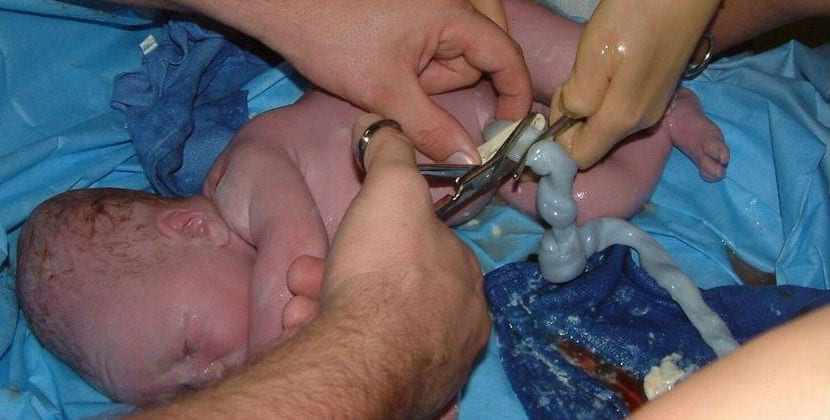
In this context, respectful birth becomes particularly important. This approach aims to provide an environment that respects the mother's wishes and needs, enhancing her autonomy in making informed decisions (position, companions, pain management) and closely monitoring the baby's well-being. Immediate skin-to-skin contact, delayed cutting of the umbilical cord, and early initiation of breastfeeding are encouraged, while also reducing unnecessary interventions.
Advantages of the birthing process and vaginal birth
The birthing process is a whole of uterine contractions, dilation of the cervix, and the movements the baby makes to come out. Although this process can be difficult and often painful, it provides significant benefits for both parties.
- Contractions help the baby's lungs mature by expelling fluid from the lungs, facilitating the transition to breathing air; thus, it requires less respiratory assistance at birth.
- It is an integral part of the mother's experience, as she is usually awake, can see her baby being born, and in many cases can hold the baby immediately; this enhances bonding and a sense of personal achievement.
- It reduces the risk of significant maternal bleeding, especially when the birth proceeds normally and you properly manage the delivery of the placenta, compared to abdominal surgery.
- The onset of “milk coming in” starts earlier and helps establish breastfeeding; this occurs due to early skin-to-skin contact, the baby latching on early, and the hormonal waves of birth.
- Oxytocin released during birth helps the mother emotionally prepare and facilitates bonding with the baby; this also affects postpartum care and protective behaviors.
- It reduces the risk of infection because there are no cuts made in the abdomen or uterus and no internal stitches are placed.
- It avoids the unique risks of major surgery, such as thrombosis, injury to neighboring organs, anesthesia complications, internal adhesions, or healing issues.
- Vaginal birth is a physiological process, so recovery is generally faster. Most women can get up and walk shortly after giving birth and care for their baby, making it easier to care for the newborn and reducing dependence on external help.
- Lower risks of asthma and some allergies have been observed in babies born vaginally; this is related to bacterial colonization during passage through the birth canal and better maturation of the immune system.
- Endorphins released during birth help the mother relax postpartum, improve her mood, and make it easier for her to face the first hours and days with the newborn more calmly.
Emotionally, many women describe vaginal birth as a empowering experience, even if it is difficult or requires some interventions. Others may experience it with fear or anxiety; therefore, providing respectful support, information, and psychological support when needed is very important, as well as allowing for the evaluation of postpartum experiences.
In any case, whether in vaginal birth or cesarean, the main goal should always be the same: to protect the physical and emotional health of the mother and baby, choosing the safest delivery method according to the circumstances. Establishing good communication with your healthcare team, knowing your options, and preparing a flexible birth plan if you wish can help you feel more secure and actively participate in the decisions made; if something changes, the team will act to protect your and your child's health. Cesarean and vaginal birth are not “better or worse births” in absolute terms, but different tools for different clinical situations; cesarean can save lives when there is a medical indication, and promoting vaginal birth when everything is going well generally provides more benefits and less risk in both the short and long term.








































Comments
(9 Comments)