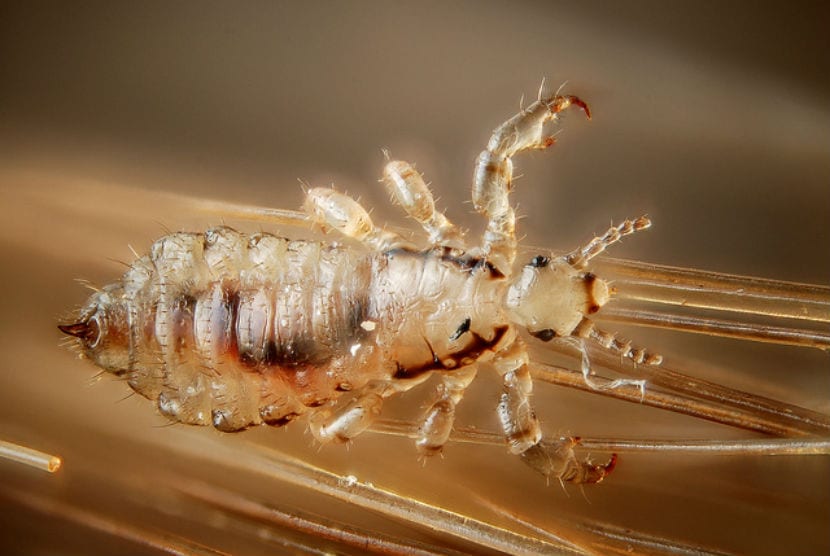
One day, while picking up your children from school, another mother fearfully says to you: "Did you know there are head lice at school?"… and panic begins. Head lice are one of the most common health problems among school-aged children, causing anxiety in families, leading to absenteeism and many questions about how to effectively treat them.
What should you do in this situation? Why do these unpleasant bugs return to our children's heads every few months? Understanding how head lice live, how they spread, and which treatments are truly effective is the key to controlling them; this way, you can treat them without falling for myths and misusing products. Let's try to clarify this.
What are head lice?
Head lice are parasites as old as humanity itself. The oldest known traces date back to 6900-6300 BC, found in the Jerusalem desert. No one has been able to get rid of them; even mummies in Egypt are not exempt from this situation.
Although there are many types of head lice, the ones we are really concerned about are those that live on human heads and cause pediculosis.
They are human-specific
Head lice are parasitic insects that are exclusively specific to humans. They do not infect other species or pets. They do not transmit serious diseases, but they can lead to issues such as severe itching, difficulty sleeping, sores from scratching, and sometimes bacterial superinfections.
They have six legs and use these legs to cling tightly to the hair roots; they can only live outside our heads for 1-2 days. They must feed on human blood several times a day to survive. When they detach from the scalp, they quickly weaken and die due to dehydration and starvation.
When they reach a suitable head, they lay their eggs, or louse eggs. They always leave their eggs close to the hair roots so they can benefit from the warmth of our heads. Female lice attach their eggs with a glue-like substance; they are waterproof and quite resistant, so no matter how much our children jump or how we comb their hair with a regular comb, they do not fall off.
It takes about 8-10 days for a head louse to hatch from its egg, and it needs another 9-10 days to become an adult louse and reproduce. Each female can lay dozens of eggs throughout her life; this explains how a small infestation can spread rapidly if not intervened in time.
They can live for 30-50 days on a host; they feed by sucking human blood. However, when they fall off our heads, they can only survive for a few hours, at most two days, so transmission through the environment is limited compared to direct contact.
Ways of transmission
Head lice neither fly nor jump, but they have a great ability to spread among people. They move by quickly walking between hairs.
Direct head-to-head contact or sharing items such as hats, beanies, hairbands, helmets, combs, or towels are ways head lice spread among people. Head lice can move quite quickly from one hair to another when the hair is dry, but their mobility significantly decreases in wet hair.
The individuals most susceptible to this infection are school-aged children. Generally, girls are more frequently infected.
The length of the hair does not significantly affect the ease of head lice establishment. In general, they prefer clean hair over dirty hair and straight hair over curly hair, as they move better and hold on more easily.
Girls are more likely to be infected because they usually play calmer and closer games, so their heads are very close to each other, allowing head lice to easily transfer from one host to another. When a head louse enters a classroom, without coordinated screening and treatment measures, very few can escape without getting infected.
Additionally, transmission can occur through objects (hat, pillow, plush toy, crown), but it is less common than direct transmission. Still, it is important to pay attention to the hygiene of these items when there is a case at home.
How is it detected?
The symptom that suggests your child is infected is itching. The child constantly scratches, especially at the nape of the neck and behind the ears. However, we should not rely on this: only 20-30% of people initially feel intense itching, and by the time itching starts, head lice have usually been on our heads for several weeks.
The best thing is to regularly check our children's heads, especially during the school year or when cases of pediculosis are reported at school.
It is not easy to see a live head louse: they move quickly among dry hair, but they are much less agile in wet hair. Using a liendrera to comb wet hair after washing is a good idea, as we can pull them out more easily.
Place a white towel on the child's shoulders. It will be easier to distinguish the head lice and eggs that fall while combing.
What do head lice and eggs look like?
It is important to know the shape and appearance of head lice and their eggs. Check the hair in good light, natural light is best; however, if that is not possible, use a strong lamp. Start by looking at the nape of the neck and behind the ears, as these are the areas where these insects are most commonly found.
Adult head lice are 2-3 millimeters long, they are gray-brown and camouflage well among hair. Nymphs are smaller and a bit lighter. Although the eggs may look like dandruff, dandruff easily falls off the hair, while an egg will only separate from the hair if you pull it tightly.
Another useful detail is the distance to the root: live eggs are usually closer than 1 cm to the scalp; those further away are generally empty remnants that do not have the capacity for transmission.
Now the grandmothers' secret: When you crush the egg against a hard surface with your nail while it is alive, you usually hear a small crunching sound. Although this may be a bit unpleasant, it is a good way to confirm that what you have removed from your child's hair is an egg.
Use a Liendrera
A liendrera is an essential tool for both diagnosis and treatment. Comb the hair from the roots to the tips with the liendrera; remember that live eggs will stick close to the root like head lice.
Divide the hair into sections and do not leave any section without combing it several times. You can use tweezers to separate the strands. After each pass, clean the comb with a paper towel or wash it under running water.
If we cannot find live head lice or eggs, we should not reduce our attention: regularly checking the children's heads allows us to notice a possible infection before it is too late and helps us avoid resorting to radical methods like completely shaving the hair.
If we find live head lice or eggs, it is necessary to follow a proper protocol for eradication treatment, combining a product (pharmacological or physical) with detailed combing using a liendrera.
Treatments: what are available and how to choose the most effective one
There are many lotions and shampoos for pediculosis treatment on the market. None are considered 100% effective in a single application, so it will be necessary to repeat the treatment and carefully combine the use of a liendrera. Additionally, choosing the right product and applying it well is more important than the active ingredient.
Classic pharmacological treatments
Traditionally, treatments have been based on products that affect the nervous system of the head louse (neurotoxic pediculosis treatments):
- Permethrin and pyrethrins: are classic treatments for pediculosis. They cause paralysis and death by altering the sodium channels of the head louse. They are usually offered as shampoos or lotions at a concentration of 1%. They have been quite effective over the years, but in many countries, increasing resistance of head lice has been reported, which reduces their effectiveness.
- Malathion: is an organophosphate insecticide. It causes excessive stimulation and death by inhibiting the acetylcholinesterase of the head louse. Modern formulations combine malathion with other components (such as isopropyl alcohol or terpene derivatives) that enhance its effectiveness. It is one of the few products that has both pediculosis treatment and significant egg-killing activity, so when used correctly, very high cure rates can be achieved with one or two applications.
- Other neurotoxic products (such as lindane) have fallen out of use due to higher toxicity and lower effectiveness, so they are not recommended in daily practice.
An important point is resistance: when the same pediculosis treatments are used repeatedly, head lice can develop genetic mechanisms that make them less sensitive. In these cases, repeatedly using the same product only adds toxicity and cost, but does not kill the parasite. Therefore, many current guidelines prioritize products that have a physical effect (such as dimethicone) or high egg-killing formulations.
Physical effect treatments (non-pesticide)
Physical effect treatments do not affect the nervous system of the head louse; instead, they suffocate it or alter its outer structure:
- Dimethicone: is a silicone that coats the head louse and its eggs; it creates a waterproof layer that prevents water and gas exchange. The insect cannot expel bodily fluids or breathe well and dies. Therefore, it does not develop resistance and is well tolerated. Lotions with a concentration of 4% or higher have been proven to be quite effective.
- Mineral oils and various silicones: many commercial products combine mineral oils with silicones to achieve a similar occlusive effect to suffocate head lice and their eggs.
- Petroleum jelly and thick ointments: are usually used for head lice on eyebrows and eyelashes; where aggressive pediculosis treatments cannot be applied. They are left on for several hours and then carefully combed out.
These treatments generally require waiting times that vary from 5 minutes to several hours, depending on the formulation. It is very important to adhere exactly to the time specified in the prospectus; removing it earlier significantly reduces effectiveness.
Natural treatments: what they can and cannot provide
Many parents prefer natural options because they are afraid of chemicals. The most commonly used products are:
- Coconut oil: helps to suffocate head lice and facilitates the sliding of the lice comb. Apply generously, cover with a cap, leave for at least 2 hours, and then comb.
- White or apple vinegar: its acidic structure helps to soften the sticky substance that attaches the eggs to the hair, making them easier to fall off when combing. It is used diluted or as a final rinse.
- Tea tree oil and other essential oils (coconut, ylang-ylang, neem…): have anti-parasitic properties and may provide mild support or prevention, but there is limited scientific evidence regarding their capacity to completely eliminate an active infection. They should always be used diluted and with caution in young children.
It is best to think of these treatments as support for a well-planned treatment; especially not as a standalone treatment when the infection is intense.
Why is it so important to repeat the treatment?
The biggest mistake made is not repeating the application the following week. Most products do not kill 100% of the eggs in a single application, and the life cycle of the head louse works against us if we trust it.
Studies on the life cycle show the following:
- The egg typically cracks within 8-10 days.
- It takes approximately 9-10 days for the nymph to become an adult capable of laying eggs.
Therefore, in treatments that are not completely egg-killing, two or even three applications are recommended:
- First application: Day 0, to kill live head lice and the most vulnerable eggs.
- Second application: Between days 7-10, when most of the surviving eggs have hatched, but they have not yet become adults that start laying eggs.
- In some schemes, if the product is not egg-killing or if the infestation is very intense, a third application is recommended around days 13-15.
In addition to reapplying the product, it is mandatory to use liendrera every day or at least every 2 days for 10-14 days; because any remaining eggs can restart the problem.
Environmental measures and prevention at home and school
It is a good idea to “quarantine” children's hats, crowns, berets, scarves, and other accessories; because head lice live only a few hours outside the human head, at most two days. Additionally, it is important to thoroughly wash brushes and combs; these should only belong to the child.
General recommendations are as follows:
- Washing clothes, sheets, and towels at 60 ºC whenever possible and drying them at high temperature for at least 15 minutes is important to ensure the death of head lice and their eggs.
- Items that cannot be washed (stuffed toys, delicate pillows) can be kept in closed plastic bags for 10-15 days or frozen for 2-4 days if possible.
- Avoid sharing combs, brushes, hats, helmets, hair ties, or towels among siblings or friends.
- It is important to clean combs with hot water or alcohol after each use.
As previously considered, it is not necessary to treat the house or spray beds with insecticides; regular home hygiene and washing textiles are sufficient.
Tips for preventing head lice
Dermatology and Pediatrics specialists recommend several simple measures to reduce the risk of transmission, especially during school periods:
- Using hair gel, spray, and conditioner makes it harder for head lice to hold onto the hair.
- For children with long hair, it is recommended to keep the hair short or tied up; in a ponytail, braid, or bun.
- If there are cases at school, using liendrera 2-3 times a week is beneficial to detect mild infections before they spread.
- It is important to avoid sharing objects that have head lice attached (combs, hats, headphones, or helmets).
- Care should be taken with “chemical preventive treatments”: they do not completely prevent infestation and can lead to the emergence of resistant head lice or “super lice” when overused.
Should a child stop going to school?
If the child is being treated properly, there is no need to stop going to school. Treatment can be done in the evening, and the child does not miss classes. Policies to keep children out when they only have eggs (without live head lice) are not considered necessary or beneficial.
The most effective approach is for families to:
- Treat the child according to the recommendations of a pediatrician or pharmacist.
- Inform the school to notify other parents and ensure checks are made.
- Also check close contacts (siblings, roommates) and, if necessary, check the entire class; because many cases are asymptomatic.
After completely eliminating head lice, you can use some repellents; sprays like essential oils or special hair creams. Their effectiveness is not guaranteed, but they can help as an additional barrier and should not replace regular liendrera checks.
As a result, living with the likelihood of head lice is part of having school-aged children, but clear information, well-executed treatment, and the disciplined use of liendrera can be managed without dramatizing and using unnecessarily aggressive products, minimizing reinfections and their impact on family life.
























Comments
(10 Comments)