Recently, while walking through large stores, I have been paying attention to roller shoes in the shoe section. They are available in every color and price range (but none are truly cheap). Most children get excited when they see these, and there is an impression that these shoes will be the most desired gift for many Christmases and birthdays.
Without being a foot health specialist or a doctor, I felt that these shoes might not be good for children's feet. Because I got the impression that they worsen balance and stability. I experienced an event that confirmed this thought; my eight-year-old neighbor fell while wearing these shoes, but fortunately, he escaped with a minor bump.
Apparently, my neighbor was "lucky" when he fell because pediatricians and orthopedists have diagnosed many children with ankle and arm fractures in a very short time. All of this has resulted from the use of roller shoes. Therefore, doctors and foot health specialists have issued warnings about the dangers of these shoes. These shoes were introduced for sale in the United States in 2000, and in Spain, pediatricians diagnosed five children with ankle fractures in just one week, which raised alarm bells.
As a result, a research team led by Roberto Pascual from the University of Elche conducted a study examining the potential dangers of roller shoes and discovered that 11% of preschool and elementary school-aged children wear these shoes in educational institutions. Moreover, most of these children spent about eight hours a day in roller shoes; whereas this usage time should be a maximum of two hours per week and should always be for recreational purposes.
These types of shoes are commonly known as Heelys or "roller shoes"; they are actually a mix of a shoe and a skate: they resemble regular sneakers but have one or two wheels in the soles that allow for sliding. The problem is that despite being sold in shoe stores, experts emphasize that these are not a traditional shoe, but clearly a toy and should be used with specific limitations.
So, why do experts say that roller shoes are dangerous? Beyond falls, there are less obvious consequences related to children's foot development, walking, and posture that are important to know before making a purchasing decision.
Insufficient Safety Measures
First of all, foot health specialists state that this is not a traditional shoe like any sports shoe, but rather a children's toy. However, despite the warnings, more and more children are wearing such shoes, and most use them like their everyday sneakers.
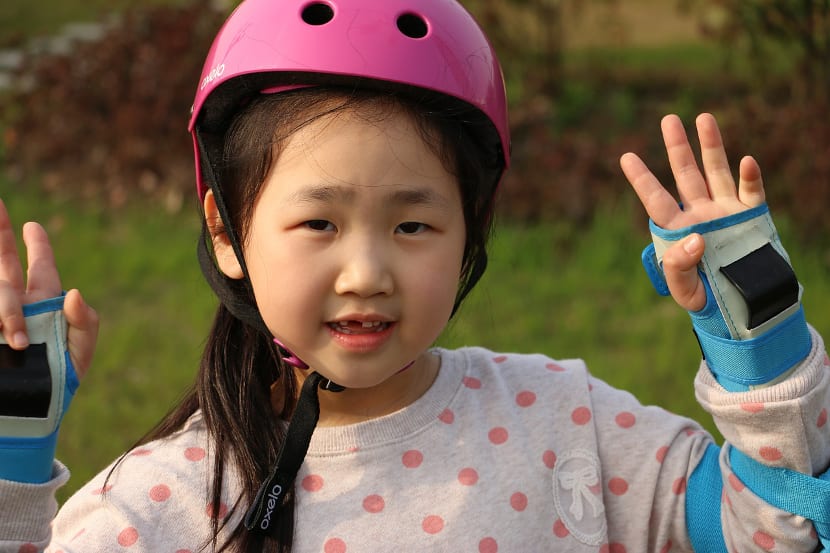
Although these shoes are not exactly roller skates, they still have wheels and allow for sliding at a certain speed. Therefore, children wearing these shoes need to use knee pads, wrist guards, elbow pads, and helmets; this is important to prevent risks and injuries, just like when using skates, skateboards, or bicycles.
However, because they are seen and sold as shoes, many families do not realize that they are not taking the necessary precautions to protect their children. In fact, studies on injuries related to these shoes have observed that none of the injured children were using protective gear; this increases the risk of wrist, elbow, shoulder, or even head fractures.
Pediatric and orthopedic specialists indicate that there has been an increase in ankle fractures, ankle sprains, elbow dislocations, and head injuries associated with the use of these shoes. Some medical publications emphasize that most injuries occur during the first uses, when the child has not yet fully grasped balance and braking techniques.
For this reason, many pediatricians compare these roller shoes to the famous "walking aid": children are offered “a high-cylinder motor without management permission”. In other words, much more movement and speed is provided than what is prepared for the children's balance and coordination systems to manage; especially when used without supervision and protective equipment.
The Forefoot Carries a Large Portion of the Weight
One of the most studied aspects of roller shoes is how the weight distribution on the foot changes. These types of shoes increase the heel height by about four or five centimeters. According to experts, the heel is anatomically prepared to carry the largest portion of body weight. When we walk barefoot, approximately 75% of the load falls on the heel, while 25% falls on the forefoot.
If the heel height is excessive, the load mostly shifts to the forefoot instead of the heel. Various studies have observed that the load on the forefoot increases by 20% compared to a normal shoe and that this rate can rise to up to 40% when wearing roller shoes. In other words, biomechanically, the child is constantly in a situation as if they are wearing a shoe with a 4 or 5 centimeter heel.
You may be questioning the real significance of this change, but in reality, if a large portion of the child's weight does not fall on the heel and is concentrated on the forefoot, this situation can lead to growth problems in the bones of the forefoot. Possible long-term consequences include metatarsalgia (pain in the "cushion" area under the toes), Freiberg's disease (loss of blood flow in some bones of the forefoot), or disorders in the development of the foot arch.
Additionally, the shift of load from the heel to the forefoot also affects proprioception; that is, the information the brain receives about how and where the foot is supported. When avoiding the heel and overloading the front part, the nervous system causes the ground contact to be interpreted differently; this can affect the child's overall balance and posture while walking or running.
Moreover, the change in how the foot supports itself also alters the center of gravity of the body. The child tends to lean slightly forward to compensate for the elevation of the heel; this affects the knees, hips, and lower back. In the long term, if used for many hours a day, this situation can be associated with back pain; especially in the lower back area and can lead to the emergence of flat feet that do not develop physiologically from certain ages onward.
As Expected, Pressure on the Heel Increases
It may seem contradictory, but another striking data from studies is that the average pressure on the heel also changes in children who regularly use roller shoes; at certain support stages, this pressure can be 1.5 to 2.7 times higher than that of a normal sports shoe.
This is due to the shape of the sole and the way the presence of wheels changes the contact with the ground. The child makes harder and less gradual supports on the heel and forefoot to maintain balance. The combination of increased height, instability, and extra weight alters the effect on bone and muscle structures compared to a traditional shoe.
So, what are the consequences of this? Experts indicate that there is a possibility of muscle shortening in the long term, particularly affecting the posterior muscle chain (calves, hamstrings, soleus). When the heel is always elevated, these structures work in a shorter position and can adapt to this length; this makes full stretching ability more difficult.
Continuous shortening of the posterior chain has been associated with heel pain (talalgia); it can lead to conditions like Sever's disease in active children and restrictions in sports or physical activities that require good flexibility. Additionally, it can pave the way for the emergence of functional flat feet; because the foot's musculoskeletal system does not operate within the normal range of motion.
It should be reminded again that we are talking about children in their growth phase. The way the foot is supported, its balance, or posture can continuously affect how bones and muscles develop. Therefore, experts emphasize that these shoes are not harmless when worn for many hours a day.
Twice the Weight of Normal Sports Shoes
Due to their wheels and stiffer structures, these types of shoes are heavier than traditional sports shoes. In many models, the weight can be up to twice that of normal lightweight sports shoes.
What is the result of this? This extra weight is not recommended for long-term use by experts; it can lead to hip and spine problems in the long run. Every step requires more effort to lift the foot and move the leg; this increases the workload on the ankle, knee, and hip joints.
In children who wear these shoes for many hours, repeated excessive effort can lead to muscle fatigue, joint discomfort, and even changes in walking patterns to compensate for the extra weight. This less natural walking pattern also affects the alignment of the knees and hips.
Additionally, the stiffer structure of these shoes reduces the flexibility of the sole since it is designed to compensate for the instability of the wheels. The foot cannot flex normally during walking; this restricts the movement of the toes and the arch of the foot. This lack of movement causes the foot muscles to adapt to working less; this leads to a loss of strength and coordination ability.
Over time, a very stiff and heavy sole can hinder the proper development of foot muscles, increase children's tendency to drag their feet, and lead to minor sprains or trips due to a lack of fine control with each step.
Imbalance, Falls, and Changes in Walking
Another important point emphasized by studies is the imbalance of support. Having a wheel (and in some models, two wheels) in the heel area reduces the contact surface with the ground. It has been observed that the support surface is reduced by several square centimeters in children wearing these shoes; this means a less stable foot.
This unbalanced foot results in an abnormal step; this can affect other structures such as the ankle, knee, or even hip. The transition from walking to sliding is made simply by changing foot support; this significantly alters the child's walking pattern. The neuromuscular skeletal system, responsible for maintaining joint and balance, has to work differently and more strenuously.
When this new pattern persists for long hours, overuse of certain structures (tendons, ligaments, muscles) occurs; this can lead to inflammatory conditions or even degenerative processes in tendons and joints. In children who already have issues with their feet or knees (flat feet, genu valgum, etc.), foot health specialists indicate that roller shoes can worsen these problems.
The risk of falling is similar to other sliding devices (skates, skateboards, scooters...); however, there is an important difference: because they are seen as shoes, most children use them without protective gear and wear these shoes in unprepared environments (house corridors, stairs, crowded courtyards, shopping malls...). Therefore, wrist fractures are quite common; the natural reflex when falling is to put the hands in front, and if there is no wrist support, the impact concentrates on that joint.
Children's emergency service reports include not only fractures but also ankle sprains, head injuries, knee injuries, and various bruises. A significant portion of these injuries occurs during initial uses; the child is still unable to control speed or knows how to brake safely.
Experts' Recommendations and Usage Duration
The warnings from the General Council of Podiatrists regarding the serious consequences of children using roller shoes as everyday footwear should be taken seriously. In fact, they suggested that educational institutions should ban the use of these shoes in class; thus, unnecessary risks can be avoided (when going up and down stairs, during physical education classes, during recess...).
According to current studies, podiatrists and pediatricians agree that roller shoes should not be used for more than one or two hours a week; they should always be used as a toy at specific moments; they should never be used as the main footwear for going to school or spending the day outside.
Among the recommendations that experts frequently repeat are:
- Consider them as a toy, not as daily use footwear.
- Limit the duration of use to short periods and safe surfaces.
- Always use protective equipment (helmet, elbow pads, knee pads, wrist guards); just like with rollerblades.
- Prevent their use on stairs, steep slopes, or areas with traffic.
- Do not allow children with pre-existing foot, knee, or back problems to use them; without assessment by a podiatrist or pediatrician.
- Carefully observe during initial uses and teach the child to brake, turn, and maintain balance.
As mentioned before, we are talking about potential issues in muscles, foot bones, and even in the hips and spine. Not making these shoes the daily footwear for children should be common sense. However, although it may seem unbelievable, some families pay more attention to fashion than to their children's health; without knowing all this data.
Characteristics of Suitable Shoes for Children
To better understand why roller shoes cause so many problems in daily use, it is important to remember what characteristics a good children's shoe should have. During childhood, foot development is crucial, and proper step protection is necessary to prevent pathologies in both early and adult life.
Children's podiatrists state that suitable shoes for children must meet these basic criteria, among others:
- Flexible sole that allows natural foot movement, especially in the toe area.
- Lightweight, to avoid overloading the hips, knees, and ankles.
- Solid support at the heel but without being overly stiff; it should provide stability without restricting movement.
- Minimum heel height (a very small difference between heel and toe), ensuring balanced weight distribution.
- Wide toe box, should not compress the toes and should allow them to expand when supported.
- Good adjustment with laces or Velcro, should prevent the feet from moving inside the shoe.
When we compare these characteristics with roller shoes, we see that almost the opposite is true: more weight, stiffer sole, elevated heel, and also the presence of a wheel that adds instability. Therefore, although they may be used for play in certain situations, they are not a healthy option to replace daily sports or school shoes.
Moderate and Responsible Use: What You Can Do
Of course, if you ensure that your children use roller shoes in a moderate and properly supervised manner, you have the right to purchase them. Experts do not want them to be banned as toys; however, they emphasize that their continuous use should not be normalized.
Some suggestions for safer use:
- Limit their use to specific recreational times; in wide and flat areas.
- Always wear helmet, elbow pads, knee pads, and wrist guards; just like with rollerblades.
- Do not allow the child to take them to school or on long journeys where they have to climb stairs or walk for extended periods.
- Check the size of the shoes periodically; check if they are still suitable and if they are pinching.
- If the child reports pain in the foot, ankle, knee, or back after use, reduce usage and consult a specialist.
For such shoes, the Heelys brand is one of the reliable ones on the market; if you are considering using them occasionally, along with safety precautions, taking all this information into account:
- Heelys model 1 for girls
- Heelys model 2 for boys
Wheeled shoes will attract the attention of many children because they are eye-catching and very fun; however, knowing all their risks and limitations helps make more informed decisions: considering them occasionally as a toy, always requesting protection, and prioritizing a truly healthy shoe that will protect our children's feet and posture in daily life.
Despite all these expert warnings, will the sales of wheeled shoes continue to rise? Do you have any experience with such shoes? Do you really find it that alarming? I eagerly await your comments!











Comments
(9 Comments)