In recent years, video games have become a very powerful tool for health education, especially on everyday topics like hygiene. Issues that were once conveyed only through posters and speeches are now being learned through interactive screens, animated characters, and fun challenges that engage both children and adults.
At the same time, hospitals and health professionals place great importance on gamification to reinforce hand hygiene as a critical habit. Games specifically designed to teach children routines such as hand washing, tooth brushing, or using the toilet are being developed, making these habits a part of daily life.
The Importance of Hygiene in Health
In a healthcare setting, a simple hand wash can make the difference between good recovery and serious complications. In hospitals, vulnerable patients, invasive procedures, and microorganisms that can lead to infections coexist. Therefore, hand hygiene is considered the most effective way to prevent healthcare-associated infections. This simple action, which takes only a few seconds, can prevent the spread of germs, significantly reduce antibiotic use, and shorten hospital stays, benefiting patients, their families, and the healthcare system.
The World Health Organization has identified five critical moments when professionals must practice hand hygiene to protect patients and themselves: before direct contact with the patient; before any aseptic procedure; after the risk of exposure to body fluids; after contact with the patient; and after contact with the immediate surroundings of the patient (shelves, tables, devices, etc.).
This logic is applicable not only in hospitals but also at home and in daily life. Teaching children to wash their hands before eating, after using the toilet, when returning from outside, or after blowing their nose is one of the simplest and most effective ways to prevent colds, gastroenteritis, and many infections commonly seen in childhood.
Therefore, combining health education with video games has become a highly attractive strategy to reach a wide range of audiences: from healthcare personnel to families with young children, from patients with chronic illnesses to users who just want to improve their habits.
The Virgen del Rocío Hospital Plan: Life-Saving Hand Hygiene Games
In Seville, Virgen del Rocío University Hospital has pioneered the 2025-2027 Hand Hygiene Improvement Plan. This plan is supported by the Preventive Medicine and Public Health Unit and is backed by the hospital management and various clinical units.
This plan consists of four main strategic lines and five working phases and has a clear goal: to prevent hand hygiene from being perceived merely as a protocol and to make it an integral part of the hospital culture, turning it into an automatic habit in every health interaction.
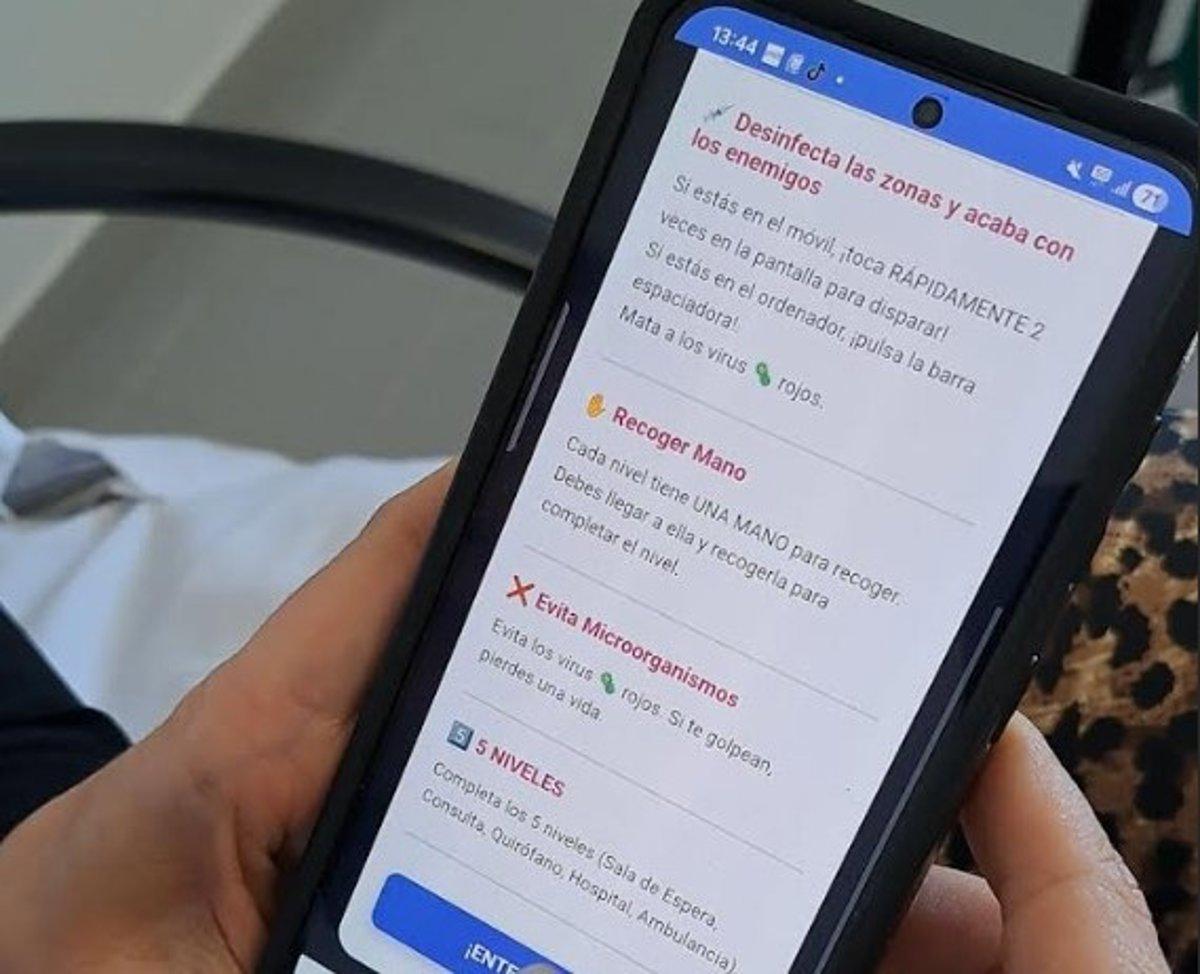
One of the most notable initiatives of the program is the creation of a series of educational video games designed to emphasize the importance of hygiene. These games are designed for use by both professionals and patients and their families, accommodating different ages and profiles. The games are accessible through the higiena-heroes website.
The hospital emphasizes that the strategy goes beyond classical educational methods. Its aim is to combine practical training with active participation and digital communication, leveraging the ability of video games to capture attention, create challenges, and reinforce positive behaviors.
Raquel Valencia, Head of the Preventive Medicine Unit, states that they aim for every professional to adopt hand hygiene as a natural movement. At the same time, they encourage citizens, patients, and families to gently remind health professionals of the importance of this simple action.
The Four Main Lines of the Plan: Education, Play, Participation, and Visibility
The Hand Hygiene Improvement Plan of Virgen del Rocío Hospital is based on four complementary pillars that support each other: continuous education, gamification and awareness, citizen participation, and active visibility through information and communication technologies.
1. Continuous education for health professionals and non-health workers
The first strategic line focuses on developing practical training sessions about the five critical moments for hand hygiene as defined by the World Health Organization. These sessions are aimed not only at medical and nursing staff but also at other hospital professionals involved in patient care or around patients.
In these sessions, concrete studies are conducted on how and when to wash hands or use disinfectants; appropriate techniques are reviewed, common questions are answered, and frequent mistakes are corrected. The goal is to ensure that all staff, regardless of their duties, understand the impact of their behaviors on patient safety.
Additionally, continuous education provides updates over time, adapting to new scientific evidence, changes within the organization, or improvements in existing hygiene products and devices.
2. Raising awareness through gamification and interactive video games
The second line adopts gamification as a tool for raising awareness. Here, video games from higiena-heroes come into play, transforming technical content into fun and accessible experiences.
These games encourage users to learn and repeat the correct hand hygiene actions by offering participant dynamics, challenges, points, and rewards, whether in a hospital simulation or in daily life.
The advantage is that the video game format can attract people of all ages: from children visiting the hospital to adults who prefer to learn through an interactive experience rather than a traditional brochure.
This way, the culture of patient safety is presented in a close and visual manner, ensuring that the message is truly internalized and goes beyond remaining a written suggestion.
3. Citizen engagement: patients and families as active participants
The third line of the plan acknowledges that hospital safety is not only dependent on professionals but also on patients and families. Therefore, it encourages their active participation through informative events, workshops, testimonies, and shared responsibility actions.
In practice, this involves providing clear and understandable information about when and how patients and their companions should wash their hands, encouraging their participation in programs, and providing tools for them to be involved in the solution.
Moreover, citizens are encouraged to become respectful individuals who observe hand hygiene in the health environment. Opportunities are provided for professionals to gently remind them of the importance of this action, always within a framework of respect and cooperation.
4. Active visibility with new communication technologies
Finally, the fourth line aims to continuously disseminate key messages using information technologies. This includes informative screens, digital resources, content on the hospital website, and other internal and external communication channels.
The goal is to ensure that the hand hygiene message is always present in the daily life of the hospital, making it visible through visual reminders, specific campaigns, and multimedia materials that will keep the topic in mind for professionals, patients, and visitors.
This way, the strategy becomes a process that extends and solidifies over time rather than a one-time action; this is a fundamental element in changing habits and creating a real safety culture.
Examples of video games promoting hygiene habits in children: The Pepi Bath case
Beyond the hospital environment, there are video games and applications specifically designed to teach the importance of daily hygiene to young children. One of the most representative examples is Pepi Bath, a simulation and symbolic play game aimed at children aged 2 to 6.
In Pepi Bath, children interact with two cute characters where they can perform various hygiene routines such as hand washing, brushing teeth, taking a bath, doing laundry, or using the toilet.
The game presents four scenarios or situations related to hygiene habits; here, the child chooses their favorite character and helps them complete different actions, always with a fun dynamic and without pressure.
When hygiene tasks are completed, the game offers extra fun moments: popping soap bubbles, playing with colorful sprays, inflatable toys, rubber ducks, and other toys that make bath time enjoyable.
One of the strengths of Pepi Bath is that it relies on the very clear emotional expressions of the characters (happy, sad, uncomfortable, relaxed, etc.), which helps children understand what makes them feel good or bad without a vocabulary.
This makes it an ideal resource for both families and specialists with special needs, as there are no complex texts or speech instructions; instead, there are sounds, animations, and visual reactions that everyone can interpret.
Additionally, the design of the game prevents win or lose situations; this means that the child does not get penalized when they need more time or repeat an action. When a habit is completed, it is reinforced with applause and positive reactions, helping to establish a pleasant relationship with hygiene habits.
From an educational perspective, such applications help normalize and anticipate routines that sometimes create conflict at home; for example, going to the toilet, washing hands before meals, or brushing teeth before bed. The game serves as a bridge to discuss these topics and apply them in real life.
Gamification in Health: Beyond Hand Hygiene
Turning to video games to raise awareness about hygiene is part of a much broader movement: gamification in health; that is, using game mechanics and dynamics in non-entertainment contexts to develop knowledge, change behaviors, or accompany treatment processes.
In Spain, this approach is being reinforced and made visible through initiatives such as the "Health Games I. National Congress" held in Madrid. This congress was organized under the slogan "Playing with Health" by the communication agency COM Salud and the online "redpacientes" community.
During this meeting, projects aimed at both specific patients and the general public were presented: video games for individuals with multiple sclerosis, mobile device games that help diabetic children manage their illnesses, or physical activity monitoring systems integrated into clothing and accessories.
Additionally, the possibilities of virtual reality applied to health education were discussed; using devices like Google Glass or Oculus to simulate clinical situations, rehabilitation scenarios, or environments where patients can practice without risk.
During the congress, awards were given for the best health games in two categories: projects supported by health professionals and projects developed in the patient field; this highlights the creativity and practical benefits of these tools.
Organizing organizations and participating experts have noted that some video games can be more effective and economical than traditional health awareness campaigns, especially when it comes to promoting physical activity, improving nutrition, or instilling hygiene habits.
The key to this situation is that video games have gained significant acceptance among users, particularly among young people; these games manage to capture their attention for longer than a conversation or an informative brochure, which enhances the impact of the message.
Furthermore, there is now more scientific research supporting the usefulness of these games in various areas; from the rehabilitation of individuals with stroke or Parkinson's disease to the management of chronic illnesses and improving adherence to treatments.
Corporate support is also important: it has received support from organizations such as the congress, the Nursing General Assembly, the Spanish Cardiology Society, the Spanish Dietetics and Nutrition Society, the Andalusian Management Patient School, the Madrid Family Physicians Association, and the Spanish Federation of Employers of Pharmacists.
All of this shows that gamification in healthcare is no longer just a curiosity, but rather an established trend integrated into health education, prevention, and patient accompaniment strategies.
How Do These Video Games Adapt to Daily Health Education for Families and Professionals?
Integrating video games to emphasize the importance of hygiene does not mean changing the explanations of doctors, nurses, teachers, or families, but rather adding a tool that facilitates understanding and repetition of healthy behaviors.
In the hospital setting, games like Virgen del Rocío Hospital reinforce the information worked on in face-to-face sessions in a fun way. Professionals can suggest that their colleagues, patients, and companions enter the website, complete challenges, and discuss what they have learned.
At home, applications like Pepi Bath help children mentally practice their bathing routines before applying them in real life. Many parents use the game as a starting point: first, the child helps the virtual character wash its hands, and then repeats the process in front of the real sink.
For teachers and educators, these digital resources provide very useful support in health education activities; whether in kindergarten, primary school, or hygiene workshops, in schools and entertainment centers. They can be displayed on screen, allow students to participate in turns, and be used to reinforce the message with examples and questions.
Additionally, the absence of complex texts or long narratives in many games facilitates their use with very young children or individuals with special educational needs; they can follow the flow of the game thanks to animations, sounds, and character expressions.
Overall, well-designed video games seen in hospitals, congresses, and family settings can be powerful allies in instilling simple yet crucial habits such as hand washing, paying attention to oral hygiene, or keeping the environment clean.
When scientific evidence of the effectiveness of hand hygiene and other healthy habits comes together with the appeal and interactivity of the game, messages that are difficult to internalize beforehand become a natural part of the daily routines of children, adults, and health professionals.















Comments
(1 Comment)