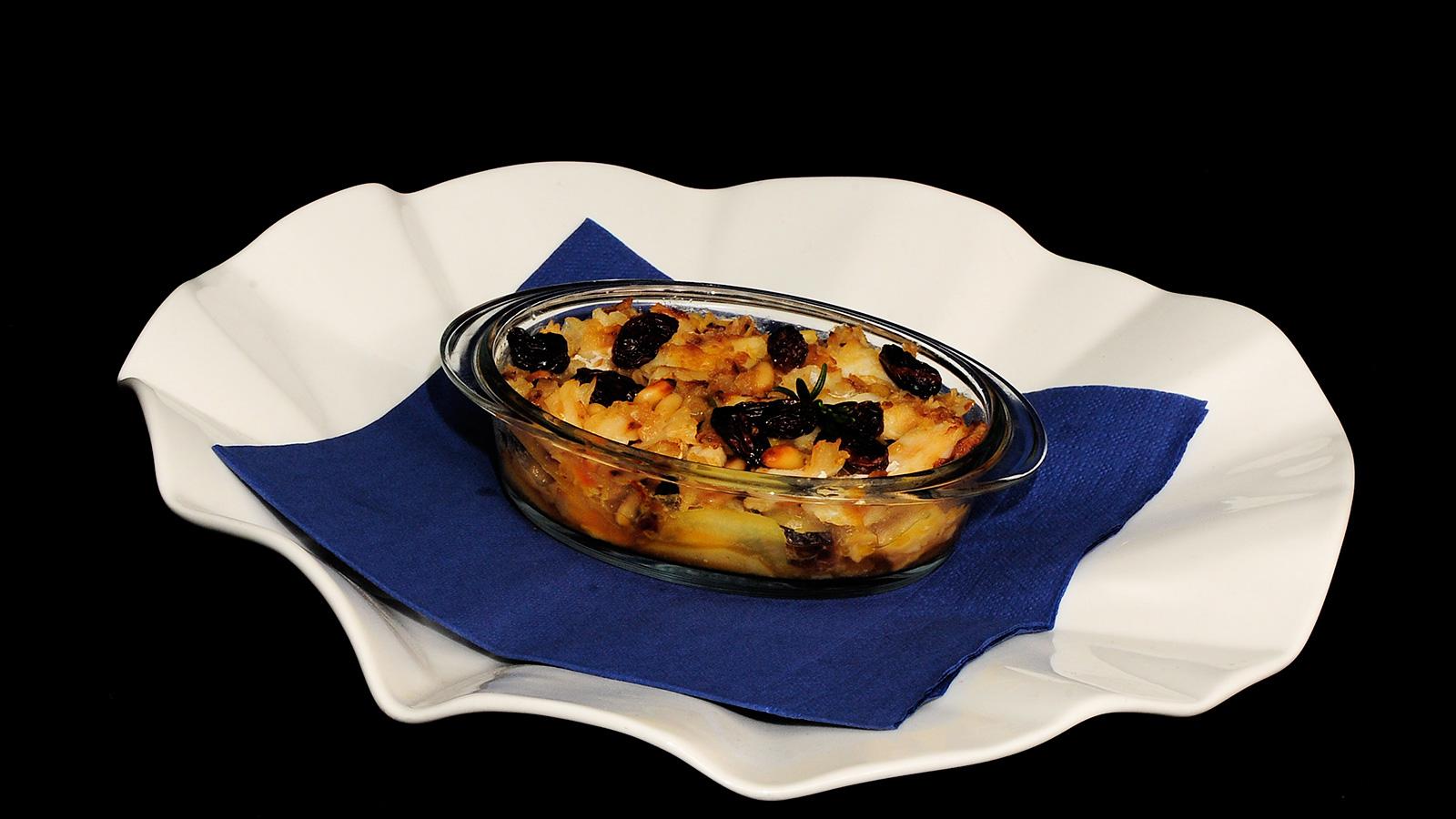
Bacalao with raisins and pine nuts is a fish dish that encompasses everything: simple, very tasty, can be made with ingredients found at home, and offers a sweet-salty flavor profile typical of the Mediterranean. This dish is inspired by Catalan tradition and classic recipes like bacallà a la catalana, but each family has adapted it in their own style: with potatoes, spinach, boiled eggs, bread, and nuts... Here, you will find a very comprehensive version, along with various preparation methods and many tips to perfect your dish.
In this article, I will provide practical tips on how to properly desalinate bacalao, how to cook it with raisins and pine nuts (in a pot, in the oven, with potatoes, with bread, with capers...), side dish suggestions, and tips to ensure your fish fillets do not fall apart, adjust the salt, and make the sauce delicious and thick. I will do all this in a friendly tone, as if someone at home is explaining it, but without skipping any important details.
The Mediterranean origin of Bacalao con pasas
The origin of this dish is based on traditional Catalan cuisine; here, bacalao is prepared in many different ways and often holds a prominent place during special occasions, such as Easter. From the original bacallà a la catalana, variations have emerged that include onion and tomato sauce, raisins, pine nuts, and usually boiled eggs and spinach, ranging from simpler to more complex. However, the combination of sweet and salty has always been preserved.
In many homes, a complete meal is prepared with onion, potatoes, peas, artichokes, and boiled eggs; it is almost like a festive dish. In others, a simpler version is preferred, where a good onion and tomato sauce stands out; this sauce is enriched with fried bread, garlic, and nuts, providing a creamy texture and a wonderful depth of flavor.
There are also versions inspired by family recipes of famous chefs; for example, those found in the book featuring recipes from Joan Roca's mother, Montserrat. These types of recipes have been developed from homemade meals designed for everyday life, but without losing the spirit of home cooking. And of course, many have adapted the dish to their own style; some replace pine nuts with almonds, some add capers and green onions, while others cook it on a bed of baked potatoes... The result is always a very rich repertoire based on the same foundation: bacalao, raisins, and nuts.
In any case, what never changes is the importance of using well-desalted bacalao. This is a key component for transforming the dish from ordinary to unforgettable: juicy fish, cooked in the right salt, absorbs the sauce without falling apart.
How to desalinate Bacalao step by step
If you are buying traditional salted bacalao, the success of the recipe starts a day in advance in the refrigerator. Properly desalting the fish is essential for the pleasant contrast with the raisins and pine nuts and is necessary to avoid an overly salty dish.
For such dishes, thick bacalao fillets are generally used; these fillets hold up well during coating, frying in a pan, and cooking in sauce without falling apart. If the pieces are too large, it is a good idea to cut them into manageable pieces before soaking them in water.
Place the bacalao in a large tray and cover it with plenty of cold water, so it is completely submerged. For thick fillets, it is recommended to soak them in water for about 48 hours; changing the water every 6 hours to gradually remove the salt.
During the desalting process, bacalao should be kept in the refrigerator, between 6 ºC and 8 ºC. This detail is important: if you leave it at room temperature, it may ferment and spoil. Once the desalting time is complete, taste it lightly to adjust the salt; if it is still too salty, you can soak it for a few more hours by changing the water.
If you want to make things easier, you can find desalted and frozen bacalao in many fish shops. This is a very practical option: when you specify which recipe you want, the fishmonger can advise you on the suitable piece and thickness.
Bacalao con pasas and pine nuts in a pot (classic version)
One of the most traditional and satisfying ways to prepare this dish is to cook the bacalao with a good homemade sauce base, a bit of liquor, and broth, along with raisins and pine nuts. This recipe is a perfect option for family meals and celebrations or to brighten up a weekday dinner, as it reheats very well.
To start, soak the raisins in warm water for 30 minutes to 1 hour. This plumps them up and makes them juicier in the dish. Meanwhile, toast the pine nuts in a dry pan over medium heat until they are evenly browned without burning; once browned, remove them from the pan and set aside.
For the sauce, finely chop the onion and garlic, peel and chop the tomatoes, and remove their seeds. In a low pot, add plenty of olive oil and sauté the onion with a clove of garlic and the tomatoes over medium heat, stirring occasionally. To balance the acidity of the tomatoes, you can add two teaspoons of sugar and continue cooking until the mixture is well softened.
While the sauce is cooking, thoroughly dry the salt-free bacalao fillets, lightly season with salt and pepper (be careful with the salt, as it is already salty), and coat with flour; shake off the excess to leave a thin layer. In a pan with olive oil and a clove of garlic, first fry the garlic until it changes color, then remove it to flavor the oil. In the same oil, seal the bacalao fillets by lightly browning both sides: it is important not to cook them completely, just to lightly brown them, as they will continue to cook in the sauce.
When the sauce is well cooked, add a bit of cognac or brandy and let it simmer for a few minutes until the alcohol evaporates. Then add the broth (which can be fish or vegetable broth) and let it simmer for a few more minutes for the flavors to meld. Next, add the bacalao fillets to the pot, along with the plumped raisins and toasted pine nuts, gently shaking the pot to ensure everything is well distributed without breaking the fish.
Cook on low heat for about three or four minutes; this is enough time for the bacalao to cook through and release its natural gelatin, which helps to bind the sauce. Avoid stirring directly with a spoon over the bacalao, as it can break apart; instead, carefully shake the pot. Taste the sauce, adjust the salt if necessary, and decide whether to serve it immediately or let it rest for a day: dishes like this improve as they sit for a few hours.
Majado version with bread, almonds, and parsley
Another beloved variation of Bacalao con pasas y piñones includes a majado made with fried bread, nuts, garlic, and parsley; this makes the sauce thicker, rustic, and very flavorful. This is an ideal preparation for dipping with bread and starts with a very similar technique to the previous recipe, but with some differences in the order of the steps.
In this case, fry a slice of bread in olive oil until it is nicely browned and set it aside for the final majado. Then, coat the bacalao in flour and fry it until all sides are a nice golden color; then remove and set aside. In the same pan, add finely chopped onion and sauté gently; when it is translucent and soft, add the grated or chopped tomato, raisins, and pine nuts, stirring a few times and adding a bit of water for the sauce to form.
Return the bacalao to the pan, reduce the heat, and allow the liquid to reduce slightly as the fish releases its gelatin. Meanwhile, prepare a majado with fried bread, garlic, roasted almonds, and parsley; work it until you obtain a thick paste. This mixture is thinned with a bit of olive oil and, if necessary, a little of the dish's own juice is added.
When the sauce has reduced a bit, add the majado to the mixture, distributing it well: instead of stirring vigorously, shake the pan to mix it with the sauce, ensuring not to damage the bacalao. Finally, with a spoon, pour the enriched sauce over the surface of the bacalao fillets, so they are well coated and absorb all the flavor.
The result is a balanced yet satisfying meal; the sweetness of the raisins is balanced by the roasted flavor of the almonds, while the pine nuts add a crunchy texture and parsley adds a fresh touch. This is a great option for celebration days or Sunday meals; if you want to serve it with a plate and bread in the middle.
Bacalao with raisins and pine nuts with baked potatoes
If you want to spend less time cooking by baking or prefer a lighter meal, you can choose a potato-based oven version; this is quite eye-catching and easy. In this case, the sauce forms in the same pan thanks to the bacalao, vegetables, and olive oil juices, and there is no need to fry the fish beforehand.
First, preheat the oven to about 180 ºC. Grease a large, oven-safe dish with olive oil and peel the potatoes. Cut them into slices about 1 cm thick and arrange them in a neat layer at the bottom of the dish. Brush with olive oil again to ensure they cook thoroughly and to prevent them from drying out.
In a separate bowl, prepare a mixture with chopped green onions (or fresh onions if you prefer them juicier), finely chopped parsley, capers, pine nuts, and raisins. Add white pepper to taste and drizzle in a little olive oil to ensure everything mixes well. This combination offers a very Mediterranean flavor between the salty taste of the capers and the sweetness of the raisins.
Sprinkle half of this mixture over the potatoes and add a bit more olive oil on top; it is important that the amount of oil is sufficient here, as it will help keep the potatoes soft and juicy. Then, place the rinsed bacalao fillets on top of this base and sprinkle the remaining mixture of green onions, raisins, pine nuts, and capers on top; finally, generously drizzle with olive oil.
Place the dish in the oven and bake at 180 ºC for about 50 minutes; however, the exact time may vary depending on the thickness of the potatoes and bacalao fillets. The goal is to keep the potatoes soft and ensure that the bacalao remains juicy while cooking, achieving a sliceable consistency. It can be served directly from the dish, and each bacalao portion can be served with a good layer of potatoes and their juices.
If you want to add color and flavor, it is a good idea to add roasted red pepper slices on top before serving. Regarding salt, you should consider that the bacalao is already salty and the capers are also salty, so you generally do not need to add more salt to the dish; perhaps you can add a little more salt to the potatoes if you prefer a stronger flavor.
Another idea: bacalao, raisins, potatoes, and onions baked slowly
In the universe of Bacalao con pasas, there are also dishes made in the oven by layering the broken fish with onions, pine nuts, raisins, and potatoes; this results in a very comforting meal. In this case, you need to prepare a sauce in a pan first and then bring the dish together in glass containers or a large dish.
First, sauté the chopped onions in a pot with olive oil along with the pine nuts until soft; when the onions are soft and slightly browned, add a pinch of saffron and a sprig of rosemary, which will add aroma to the dish. Then, add the rinsed and previously desalted bacalao, pour in some water, and sauté for a while, but do not let it cook completely, as it will continue to cook in the oven.
On the other side, fry the chopped or sliced potatoes, leaving them half-cooked: they should be slightly softened but should not reach the final point, as they will continue to cook in the oven as well. Drain well and lightly salt. Once all the ingredients are ready, bring the dishes together: first, place a layer of potatoes, then cover with half of the bacalao and onion mixture, and sprinkle a few raisins on top.
Add a second layer of potatoes and the remaining bacalao with onion, sprinkling more raisins on top. The goal is to layer the potatoes and bacalao alternately and to allow the raisins to plump up with the juices during cooking. Bake the trays at 160 ºC for about 10 minutes; this is sufficient time for the potatoes to cook, the bacalao to reach the ideal texture, and the flavors to meld.
This is a very convenient option for serving in individual portions; it is ideal for family meals or when you want something different without too much complexity. Saffron and rosemary add an aromatic touch that combines very well with the sweetness of the raisins and the tenderness of the bacalao.
Perfect tips and suggestions for Bacalao con pasas
Beyond the recipe you choose, there are some details with basic tips that will help make your bacalao con pasas and pine nuts dish restaurant quality; these are easily applicable but make a difference.
First of all, make sure to use good quality bacalao; whether it is home-desalted or purchased from a fishmonger, desalted and deep-frozen. Always specify that you want it prepared for a sauce, so they give you pieces that are suitable, thick but not excessive, evenly cooked, and can be sliced.
If you want to play with nuts, you can substitute pine nuts with roasted almonds; this pairs very well with the raisins and tomatoes. In this case, it is better to roast them first and then chop them coarsely; this prevents large, bothersome pieces in the dish. You can also combine pine nuts and almonds in the same dish or add them along with bread and garlic to thicken the sauce.
For the sauce, if you are using natural tomatoes, it may be a bit sour; to correct this, it is very helpful to add one or two teaspoons of sugar during the cooking of the onions and tomatoes. Alternatively, you can sauté the sauce well and mix it with some broth to achieve a smooth and creamy sauce; you can cook the bacalao, raisins, and nuts in this sauce.
The sweet-salty combination can be adjusted by changing the amount of raisins: if you like distinct contrasts, add a good amount; if you prefer a milder taste, reduce the ratio a bit. In any case, it is interesting to soak the raisins beforehand; this way, they won't absorb the liquid from the sauce and will remain juicy from the very beginning. If you want a special aromatic touch, you can soak them in a bit of white wine or sweet wine instead of water.
Controlling the cooking of the bacalao is also an important point: it cooks quickly, so be careful not to leave it on the heat or in the oven for too long. Generally, it is sufficient to sauté it or cook it with the sauce for a few minutes on low heat. By using natural gelatin, you can thicken and bind the sauce by gently shaking the pot occasionally; there's no need to add extra flour.
Finally, remember that these types of dishes often taste better when made a day in advance. Prepare it ahead of time, cool it, store it in the refrigerator, and heat it on low before serving; gently shake the pot to regain the texture of the sauce. This is a perfect recipe for your guests or family meals; if you don't want to deal with last-minute tasks.
Bacalao con pasas and pine nuts, in any variation, is a clear example of how simple flavors of traditional Mediterranean cuisine come together to create hearty dishes. With good bacalao, a lovingly made sauce, the right sweetness of the raisins, and the crunchiness of the nuts, you will have a stunning dish for celebrations; plus, if you play with potatoes, capers, bread, or baking, you will find a versatile, economical, and never-out-of-style recipe in your menu.













































Comments
(6 Comments)