Probably, violence against women is one of the most serious problems existing in Spain. Today, November 25th (International Day for the Elimination of Violence Against Women), and every day throughout the school year, the educational community is faced with the challenge of identifying, preventing, and eliminating all forms of male violence that can directly or indirectly affect students. Therefore, both families and educational institutions must work together to prevent and eliminate aggressive, exclusionary, and discriminatory situations and equality education should be promoted as a means of achieving real social change between men and women.
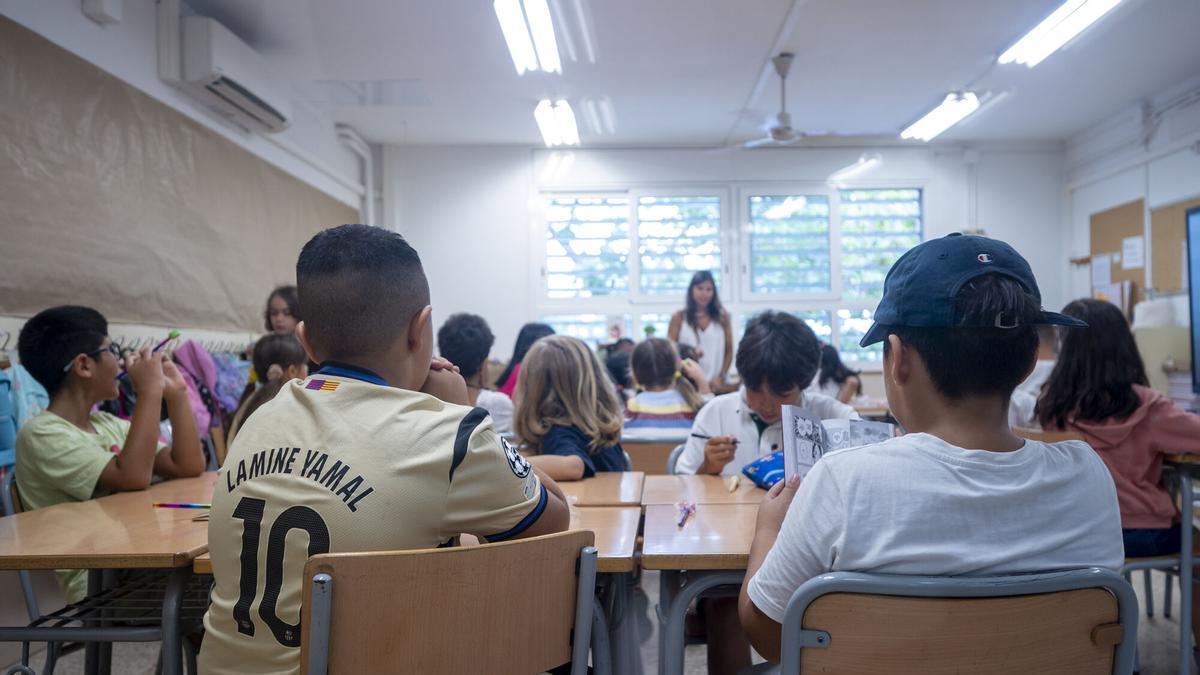
Classrooms have been a very useful space for dissuading all forms of violence and harassment among students, teaching that all students have equal opportunities, emphasizing that no one is better than others because they are male or female, and teaching that everyone deserves the same respect without any discrimination (culture, gender, special educational needs, etc.). Additionally, schools have become a key place for preventing healthy emotional-sexual relationships, detecting warning signs, and questioning gender stereotypes that fuel male violence.
So, how can violence against women be prevented in classrooms? What can educational institutions and teachers do? Educational research, institutional campaigns, and daily experiences in schools indicate that a holistic intervention is necessary: training for teachers, working with students, involving families, and reviewing the materials and messages communicated at the center. Below are some relatively simple ideas and low-effort suggestions for implementation in classrooms, along with recommendations based on more advanced studies and expert resources.
Teacher Training in Educational Institutions
I always say that teacher training does not end with a teaching career or exams. The training of teachers continues until their careers end. Recognizing and applying methods and tools to prevent violence against women and resolve conflicts among students is quite important in classrooms. Therefore, educational institutions should offer workshops, conferences, and courses to help teachers learn what to do when they encounter any aggressive, violent, or harassing situations in classrooms.
Studies on equality and harmony show that when teachers receive special training on violence against women, the school's capacity for timely intervention significantly increases. Since school management has a privileged perspective on school life, it emphasizes the following important points:
- Knowing the concept of violence against women in all its dimensions: physical, psychological, sexual, economic, social, and digital.
- Recognizing controlling and humiliating behaviors (checking a partner's phone, limiting who can be talked to, mocking, insulting...) is often normalized by young people.
- Detecting warning signs in students (sudden changes in character, isolation, declining performance, fear of a partner or peer group).
- Knowing the school's internal intervention protocols and external support resources (social services, information points, helplines).
If educational institutions do not take on this training (as is the case in most situations), the internet offers many free educational resources (documents, courses, books, guides). These resources aim to teach tools and dynamics to prevent exclusion, discrimination, and violence among students. Social skills guides aimed at preventing violence against women help teachers work with students on respect, self-esteem, and self-confidence.
Furthermore, it is very important that this training is not limited to a single session. The ideal scenario is for this training to be integrated into the school's educational project and regularly updated; new issues (such as cyberbullying or control through social media) and good practices successfully developed by other schools should be included.
The Teacher's Attitude Towards Students in the Classroom
This may seem like a simple or very obvious thing. However, the attitude of teachers towards their students plays a key role in preventing violence against women in classrooms. If the teacher treats all students equally, they will understand them all in the same way and evaluates them without any discrimination, students will directly learn that gender-based exclusion, discrimination, and intolerance lead nowhere.
Equality education requires teachers to be aware of how their own beliefs can influence their expectations. The important points are:
- Avoiding statements that reinforce stereotypes such as "boys are rougher" or "girls are more responsible."
- Distributing the floor evenly, encouraging girls to lead, express their opinions, and make decisions.
- Assigning responsibilities without regard to gender, promoting equal responsibility and collaboration.
In this section, we can also talk about the language used by teachers: they can express concepts in more general terms by using more feminine language in their lessons, for example, using childhood instead of children, and family instead of parents. In this way, it will be possible to eliminate sexism and promote gender equality. The review of non-sexist language should also be extended to written materials, exams, announcements, and communication with families.
Another thing teachers can do is dedicate ten minutes of their lesson to discussing a female character who played an important role in history. This will convey that women can have the same abilities as men and can be interested in the same things. Here, we are always talking about promoting a positive and egalitarian attitude that starts with teachers and is reinforced by showing female references in the fields of science, art, sports, or technology.
During adolescence, it is especially important for teachers to critically address romantic love myths (such as the idea that jealousy is proof of love, the concept of a soulmate, and that pain is an inevitable part of a relationship); because these myths fuel many unequal relationships. When a guidance counselor is someone who listens, supports, and can set clear boundaries against behaviors such as control, humiliation, or sexist jokes, they become a fundamental protective figure for students.
Implementation of Cooperative Learning
Cooperative learning is an active methodology that encourages teamwork among students. A team should consist of an equal number of boys and girls. In this way, students help each other to achieve the goals set by the teacher by working together. Additionally, cooperative learning is highly recommended for promoting empathy and solidarity among students.
When heterogeneous cooperative groups are formed in terms of gender, background, and abilities, students:
- Share responsibilities and leadership, preventing boys from always taking on more visible or technical roles.
- Make it a habit to listen to and value each individual's contributions.
- Learn to resolve conflicts through dialogue and respectfully; this is a key skill for preventing all forms of violence.
Additionally, special cooperative tasks can be designed to work on equality: analyzing advertisements from a gender perspective, reviewing the lyrics of songs consumed by young people, detecting sexist messages, creating awareness campaigns within schools, etc. All of these help students identify the existing male-dominated stereotypes in media and social media and become aware of how they affect their relationships.
It is also quite interesting to observe the series and visual content that children and young people watch: various studies have found that psychological violence and stereotypical roles are still commonly found in children's and youth programming. Group analysis allows for the deconstruction of these messages and the proposal of alternative models based on respect and equality.
Training Units for Preventing Violence Against Women
Rewarding training units are very useful for carrying out and developing specific activities (in this case, related to violence against women). In these activities, students must take the lead. For example: each can read a paragraph from a story or book containing values and friendship stories by teachers. Short plays can represent any type of violence, discrimination, or exclusion situation and can then be discussed with students...
The design of these units can be adapted to different educational stages:
- Preschool and Early Years of Primary School: activities that promote equality through symbolic play, stereotype-free tales, and freedom in the selection of toys and costumes, reinforcing messages like “anyone can care” or “everyone can play with anything.”
- Last Years of Primary School: introducing basic vocabulary about equality, rights, good treatment, emotions, and peaceful conflict resolution, and analyzing situations where discrimination occurs in daily life.
- Middle and High School: deeply examining the concept of violence against women, working on real cases (always with sensitivity and respect), analyzing statistical data, social media, adolescent relationships, and the impact of the patriarchal system in daily life.
I leave you with a campaign that I particularly like and highly recommend for students if you have the opportunity to develop something like this as an educational institution: "No forced kiss." Remember that even if there is a specific day on the calendar, preventing all forms of violence should be worked on throughout the academic year; it is important to do this through guidance, projects, special activities, and integrating it into the daily life of the school.
Besides short films and theater monologues, documents and testimonies of surviving women are also quite useful; as this allows students to empathize with the reality of victims and helps them understand that male violence is not an abstract thing, but a serious violation of human rights. Additionally, it is recommended to add readings (novels, stories, biographies) that address different forms of violence against women and offer tools for identifying and combating them.
Preventing Violence Against Women in Sports
Sports is a great activity to eliminate all forms of violence from classes and provide equal opportunities for all students. Through sports, very important values such as diversity, solidarity, empathy, respect, tolerance, and cooperation are promoted, and many positive attitudes are formed. In this case, sports within physical education can help prevent gender discrimination and exclusion.
For physical education to truly be a tool for prevention, the following elements need to be considered:
- Creating mixed teams; girls and boys should share fields, responsibilities, and leadership.
- Avoiding comments like “this game is for girls” or “this sport is for boys,” encouraging everyone to try every activity.
- Making women's references in sports visible and questioning the idea that only male achievements are recognized.
- Working on emotional management in the face of loss, disappointment, and competition, reinforcing respect for rules and friends.
Cooperative games, trust dynamics, and activities aimed at achieving a common goal for the entire group are particularly useful for creating a mutual support environment. In this environment, it is easier to identify and stop any teasing, humiliation, or discrimination behaviors that may arise in the courtyard or locker room; these areas sometimes lead to bullying situations related to gender or sexual orientation.
Considering Emotional Education in Classrooms
Emotional education is a key element in preventing all forms of violence in classrooms. If students can express their feelings freely and without judgment, the atmosphere of the classroom improves, the tension created by certain conflicts decreases, and most importantly, they become aware of how others feel and recognize their own emotions. In this way, they can reduce instances of exclusion, discrimination, and intolerance.
Systematically working on emotions enables children, girls, and adolescents to:
- Learn to identify and name what they feel (fear, anger, jealousy, sadness, disappointment, joy, calmness).
- Develop effective communication skills to express their needs without showing aggression or surrendering.
- Recognize harmful emotions related to control and jealousy in relationships, friendships, or family.
- Develop a good and strong self-esteem; this is key to not tolerating humiliation or mistreatment.
Violence against women does not arise suddenly; it is fueled by hegemonic masculinity models, which reward dominance and power over women. Therefore, well-structured emotional education should also question the idea that men "do not cry" or must always appear strong; this helps build equitable and protective masculinities and rejects violence as a form of relationship.
Meetings with Student Parents
Of course, not everything is the responsibility of educational institutions and teachers. Not all tasks should be a burden they have to bear. As I mentioned at the beginning, teachers and families should collaborate to prevent situations of violence against women from arising in classrooms and at home. Informative and guiding meetings are very beneficial for families to learn and apply methods to eliminate any situation of violence. In this way, they raise sensitive, empathetic, supportive, and tolerant, yet responsible children/youth.
It is important to address the following topics in these sessions with families:
- The necessity of ending traditional gender roles at home (equal distribution of tasks, equal responsibility in care).
- Not dismissing sexist jokes or comments and explaining to children why they are harmful.
- How to engage in dialogue with adolescents about relationships, social media, consent, respect, and privacy.
- The importance of presenting consistent adult models with the values they want to communicate: children learn about equality by observing how the adults around them relate.
Additionally, it is important for the educational institution to collaborate with Family and School Associations (AMPA) to organize events, campaigns, and seminars to provide students with information about sexuality, emotionality, peer relationships, boundaries, and fundamental rights; this is necessary to eliminate stereotypes that could lead to the onset of gender-based violence. Collaboration with expert organizations and public awareness campaigns enhance the impact of these actions.
Coeducational Framework, Protocols, and Special Materials in Education
The fight against violence against women and equality education go hand in hand. Educating children, youth, and adolescents is key to creating a more equal society where sexist behaviors have no place. Addressing this issue in homes and educational institutions is an urgent need to recognize and combat male dominance and violent behaviors towards women from childhood.
Many studies show that violence against women is one of the most brutal symbols of inequality and that schools are a privileged space for its prevention from the very first steps of socialization. This means that schools should:
- Incorporate a gender perspective into the educational project and implement it in all their actions.
- Review teaching materials and educational resources to prevent stereotypes and sexist language.
- Implement coeducational methodologies that break the notion of “tasks belonging to boys” and “tasks belonging to girls.”
- Have clear intervention and detection protocols in cases of violence against women, both within and outside the school.
Various autonomous regions have developed institutional coordination protocols that define actions for prevention, detection, and assistance to victims. These protocols typically include training for teachers, preparation of special materials for guidance, establishment of safe communication channels where students can seek help, and coordination with specialized services.
In many cases, educational regulations explicitly state the necessity of gender equality, respect for diversity, and the absence of discrimination based on gender, sexual orientation, or gender identity. This means that the school must guarantee a living environment where all individuals feel safe and respected, and that all forms of violence, bullying, or discrimination must be addressed swiftly and professionally.
Educational, Visual, and Literary Resources for Classrooms
To effectively prevent violence against women in classrooms, it is quite beneficial to rely on a wide range of educational resources that will meaningfully convey the subject to students. These include:
- Short films and educational videos; depicting control, jealousy, humiliations, or stories of violence and suggesting alternatives based on respect.
- Social skills guides; aimed at establishing equal relationships, strengthening self-esteem, and developing self-confidence.
- Novels and stories for young people; addressing different forms of violence against women (physical, psychological, social, familial) and providing examples of solidarity and support.
- Cooperative games and group dynamics; promoting empathy, respect, tolerance, and inclusivity.
- Special materials for studying sexist language; helping students express themselves appropriately and equally.
Additionally, it is interesting to add activities for a critical analysis of the songs, movies, series, and social media content consumed by young people. Many song lyrics and stories continue to normalize jealousy, control, objectification, and power relations. Using these materials allows students to look at what they hear and see from a different perspective and helps them realize that they can choose different models.
In particular, the presence of women references in history, science, art, or sports is an indispensable resource for breaking the idea that women play a secondary role. Research projects on forgotten women in history, short biographies, exhibitions in school corridors, or presentations in the classroom are simple strategies that have a significant impact on the identity formation of both girls and boys.
Online, platforms like Equality Education bring together materials, guides, videos, and activity suggestions adapted to different educational stages; this facilitates teachers' planning of a sustainable intervention throughout the year.
What do you think about ideas that could be developed to prevent violence against women in classrooms? What ideas would you add? Are you doing any activities to prevent and eliminate gender discrimination and exclusion at school or home? When every school and every family comes together, starting from their own reality, they can contribute to creating a common culture that promotes good treatment, equality, and a definite rejection of violence against women.
Equality Education. Taking steps to prevent violence against women in classrooms not only protects girls and young women who may be at risk but also helps all children and young people grow up with values of respect, care, and equal responsibility; this creates a society where relationships are built on the foundations of freedom and true equality.































Comments
(1 Comment)