
It may seem selfish to think of yourself when you become a mother, but it is necessary to take care of yourself if you truly want to be a better mother, a better partner, and a good friend. Perhaps motherhood feels like it's filled with murky waters or you feel helpless while trying to carry the weight of society's, your family's, and your own expectations.
In this situation, one day you will question who that person looking back at you in the mirror is. Where is that woman? You may have forgotten which woman you were and still are. But that woman is still with you, asleep… and it is time to wake her up.
There is a recurring main idea in psychology, pedagogical sciences, and neuroeducation: your children's well-being is deeply connected to your emotional well-being. It is much more difficult for a physically and mentally exhausted adult to educate calmly, patiently, and consistently. Therefore, self-care is not a luxury, a whim, or something you can say “I’ll do it when I have free time”; it is a personal and family responsibility.
In this context, understanding what self-care is, why it is so difficult to prioritize, and how you can integrate it into your day becomes a fundamental part of conscious parenting.
Are you putting yourself at the bottom of the list?
Mothers (each of us) tend to put ourselves at the bottom of the list, as if good mothers do that, right? Absolutely not. Just because your children need 3 pairs of shoes doesn’t mean you have to stop buying clothes for yourself; perhaps 2 pairs of shoes are enough for them, and you can have the clothes you really need.
You don't have time to exercise because you don’t want to lose time being with your children, but why can’t you stay fit? You can work out with your children, go for a walk outside, dance in the living room, or take a few minutes for conscious movement while your children are in extra classes. The goal is not just the body: your energy and mood also improve when you take care of your physical health.
Have you ever had to prioritize your children's dinner and eat your own meal standing up? Wrong. Dinner is a moment for everyone, not just for your children. If you eat half-heartedly, in a hurry, and without sitting down, they learn that your well-being is not that important. Preserving this shared moment, sitting down with them, savoring the food, chatting without rushing, is part of self-care and family emotional education.
Can’t you find time to wash your hair because you have a schedule full of your children's activities? So, where is your priority? You shouldn’t forget about your children, nor should you dedicate all your time to yourself, but you should take some time during the day to be yourself, to take care of yourself and breathe. These small gestures maintain your inner balance and improve your emotional well-being in the long run, making you a better mother. Isn’t that great? Achieve this with small, consistent, and realistic steps.
In the field of neuroeducation, when an adult is under constant stress or overload, the nervous system remains in alarm mode. This means less patience, more yelling, more impulsivity, and more guilt. Conversely, if you take just a few minutes for yourself each day, your body and mind receive the message that you can slow down, which changes the atmosphere at home.
You want to do everything
Many mothers tend to want to control everything, wanting everything to be under control because they think that if everything is in order, everything will go well. One of the reasons mothers want to keep everything under control is that they love their children very much, more than themselves… and this is quite natural. Additionally, the media bombards us with expectations that mothers should be perfect and manage everything.
In this overly busy society, mothers are expected to work, do housework, take children to extra lessons, schedule doctor appointments, handle administrative tasks, be emotionally present, and maintain a healthy relationship, and they also need to do everything with a smile. This pressure is unsustainable and deeply exhausting.
It seems that women are constantly expected to bend, but what if you bend so much that you fall? When you always say yes, take on more than you can handle, and work as if you have no limits, your body and mind pay the price: aches, insomnia, constant irritability, easy crying, lack of motivation, the feeling of never catching up… These are alarm signals.
From a self-care perspective, it’s not just about eating healthy or exercising; it’s also about maintaining your emotional balance, mental health, and identity beyond your role as a mother. It is the necessity of still being you - with your own pleasures, needs, and projects - while existing without losing yourself in motherhood.
Self-care is also a form of prevention: it prevents chronic stress, emotional burnout, constant irritability, and "burnout caregiver syndrome." Instead of waiting to hit rock bottom to neglect yourself, you should make small changes before you reach your limit.
What happens if you fall?
If you fall, you will feel bad, think your life is miserable, and cry, a lot. You will have done this for your children, for your family… you will continue to think about your other obligations and not think about yourself. Until you fall and start to feel the pain of the collapse. Your body will be in a different world than your mind, because your mind has already stopped thinking, switched to automatic mode, and disconnected from what you really feel.
To avoid falling, you must walk as a team with your partner, but also as a couple. If you are not emotionally well, your family may fall apart, your work may suffer, passion may be lost… You may feel like you are drowning, your health may start to deteriorate, and you may even begin to question your purpose in daily life. The feeling of "I’m not good enough" or "I can’t do this anymore" is an inner cry asking you to stop, reflect, and reorganize your priorities.
After a few years of functioning without thinking, you should know that you are doomed to lose in some sort of ghost world. The extra stress you add to your life benefits neither you nor your family. In fact, children can perceive when an adult is overwhelmed very clearly: they may become more demanding, more restless, or more withdrawn because they are affected by the emotional atmosphere at home.
If you want to be a really good mother, a good spouse, a good friend, and also a good person… then your priority should be yourself. You need to reconnect with yourself and the person you want to be. You can start writing down what you want to achieve, how you want to look in a month, what drains your energy, and what gives you energy… and from there, you can start making small changes.
Many mothers feel “I don’t have time for self-care.” However, psychology insists on breaking this myth: you don’t need large time blocks, you need intention and consistency. Sometimes what is sufficient is:
- Ten minutes of silence or conscious breathing daily to lower tension levels.
- Maintaining your sleep routine a bit more, staying away from screens before bed.
- A short walk without your phone, connecting with your body and your surroundings.
- Listening to music, reading a few pages, writing down how you feel.
- Paying attention to your inner dialogue, reducing self-criticism, and being kinder to yourself.
- Asking for help and learning to delegate to your partner, family members, friends, or support networks.
It’s not about doing a lot; it’s about doing one thing every day, no matter how small.
Make yourself your priority
Yes, prioritize yourself and both you and your family will be happier. When you notice there is a problem, the only person who will start to change is you. Here’s exactly what you need to do: first set a goal, yes, you can prioritize your family and children, but you should position yourself beside them, not below them.
Your children may be happier doing three activities with you; in fact, when you are less stressed, they enjoy the time spent together more. You can set time limits for work, learn to disconnect from your phone when you feel overwhelmed, say “I can’t keep up with everything today,” and avoid blaming yourself. Set boundaries on things that overwhelm you and allow others to take on some of the tasks as well.
Find a job that better fits your life, even if it means earning less and adjusting your expenses more. Sometimes reducing economic or perfectionism pressure means gaining more mental health, rest, and presence with your children. This is a balance that should be reviewed honestly.
Connect with your partner and seek moments and nights where you are not just parents but also a couple and lovers. Maintaining this dimension is not an extra, it is part of family self-care. A more balanced and connected relationship allows for better sharing of burdens, communicating more respectfully, and approaching children from a more peaceful place.
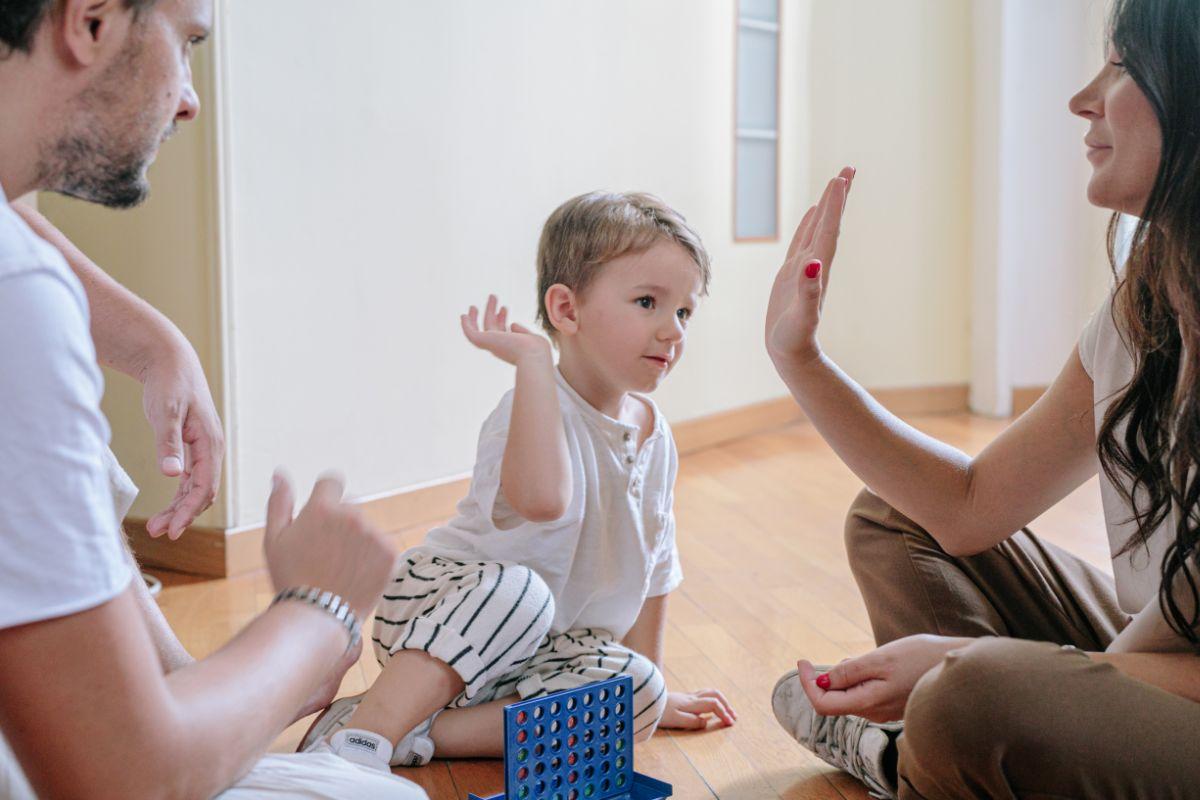
Prioritize a moment during the day to have a meal with your family, whether it’s lunch or dinner, for uninterrupted conversations, without television or phones. Take family trips or make little escapes to the park, nature, or the beach… Commit to yourself and your family, do things together two or three times a week, and soon this will become a routine. In this new order, you can also find spaces that are just for you: napping guilt-free on Sunday afternoons, taking a peaceful shower, reading quietly.
Your goal is to enjoy the time spent with your family and ensure they enjoy it too… Taking care of yourself does not take time away from your children, it gifts them a better version of you: calmer, more patient, and emotionally more available.
Your happiness is very important
You deserve all the happiness in the world, just for how hard you fight. If you don’t have a support system - a partner or family - you might think these changes are impossible. The truth is, they will be harder but not impossible.
You can talk to friends, neighbors, or family members in the same situation. You can take turns watching the kids, organize shared evenings or playgroups, so every adult has a chance to breathe occasionally. To avoid cooking too much during the day, you can cook a little more in the evenings, freeze portions, and simplify menus. You can meet friends while being with your children, in the park or in areas where everyone feels comfortable.
In situations that require more vulnerability - caring for children with special needs, caring for dependent family members, being a single-parent family, or living with limited economic resources and little social support - responsibilities increase exponentially and free time diminishes. In these conditions, self-care is not an extra: it is the key before you emotionally collapse. Adjusting expectations, asking for help from social services, associations, or family groups, and accepting that you cannot keep up with everything is a fundamental part of taking care of yourself.
It is also important to remember that self-care is not just something every mother can do individually. Public policies and social services should ensure families are supported and equal responsibility is promoted. Still, until these changes come, you can take small steps to treat yourself with more respect and compassion within your own reality.
When your children see you taking care of yourself, setting boundaries, resting when you need to, asking for help, and talking about how you feel, they learn something very valuable: that their own well-being is important too. Therefore, self-care is not just a way to maintain your health, but also a way to provide emotional health education.
Creating daily or weekly routines that include small moments for personal care - a walk, a phone call with a friend, reading for a few minutes, being quiet for a while - can make a big difference in the medium and long term. While it may seem difficult at first, with practical and clear boundaries, you will see that it is possible to find a gentler balance between your needs and your family's needs.
Your motherhood becomes more authentic and sustainable when you let go of the pressure to be perfect and allow yourself to be human: with fatigue, various emotions, and the right to take care of yourself. Every gesture you make to take care of yourself is a silent investment in your health, your relationship with your children, and your family's quality of life.


































Comments
(4 Comments)