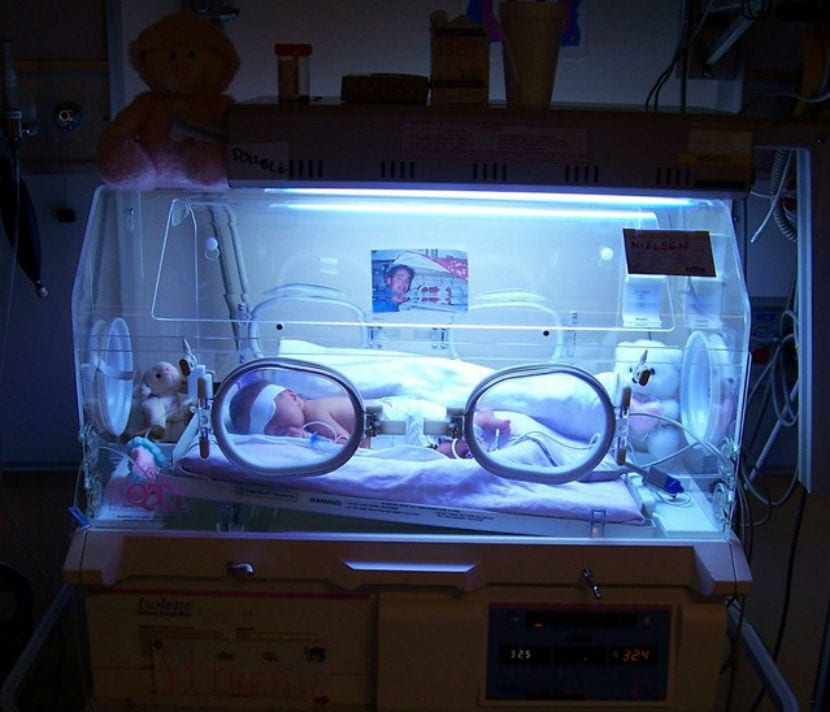
Experts warn that more and more premature births are occurring every day, and they are happening earlier and earlier...
The possible reasons are quite diverse: the increasing age of mothers at childbirth, assisted reproductive technologies, the continuation of pregnancies that previously could not survive the early weeks due to advancements in medicine, chronic diseases, infections, multiple pregnancies, or genetic factors that increase prenatal risks.
Everyone knows that there are significant differences between a premature baby born two weeks before the due date and a baby born 12 weeks or more before. The maturity of organs and systems is not the same, and therefore their chances of survival and potential long-term effects are also different.
The chances of survival and potential long-term effects are inversely proportional to the time the baby spends in the mother's womb. When the baby's lungs mature, the future of the premature baby becomes much clearer, but what happens if the baby is born at the very edge of the survival limit? What occurs in this sensitive range known as the gray area?
Today, we will look at all these babies born in the weeks considered the survival limit, where children born in the "gray area" can survive, but uncertainty and ethical dilemmas are quite intense.
Watch the video: Gray Area: Survival Limits
Prematurity
The duration of pregnancy in humans is approximately 40 weeks. A baby is considered to be born "on time" if the birth occurs between the 37th and 42nd weeks.
When a baby is born before this time, we refer to it as premature birth. On an international level, several categories are distinguished based on gestational age:
- Extreme prematurity: less than 28 weeks.
- Very prematurity: between 28 and 32 weeks.
- Moderate or late prematurity: between 32 and 37 weeks.
The earlier the birth, the more underdeveloped the structures of the fetus are. This affects many systems such as the lungs, brain and central nervous system, eyes and retina, ears, intestines, and immune system. Therefore, gestational age indicates not only how many weeks have passed but also the actual maturity level of the baby.
Globally, prematurity is a significant challenge: millions of children are born before the 37th week every year, and complications from premature birth are one of the leading causes of death for children under five. Most survivors may face learning difficulties, vision or hearing problems, and other disabilities that affect their development.
What is the "Survival Limit"?
The survival limit is the gestational period when the fetus reaches the minimum maturity necessary for survival outside the womb.
Although the development of the embryo and fetus follows similar patterns in all humans, the survival of the baby is not a closed concept: It is not possible to determine a single week in which all premature babies can survive in every situation. The World Health Organization and various scientific associations use ranges rather than a specific number because survival also depends on health resources, protocols, and the experience of each center.
When faced with premature birth, several factors need to be assessed, especially at the survival limit:
- Gestational age: how many weeks have passed.
- Estimated weight of the baby: higher weights are associated with better prognosis.
- Gender of the baby: many studies show that female infants have survival advantages and lower morbidity.
- Single or multiple pregnancy: twins or triplets generally carry more risk.
- Fetal lung maturity: whether prenatal corticosteroids have been administered to mature the lungs.
- The general condition of the baby or newborn: pH at birth, need for advanced resuscitation, presence of malformations, etc.
- The quality and level of the neonatal intensive care unit (NICU): team experience, technological resources, and action protocols.
For all these reasons, experts indicate that the survival threshold is within a week range and may slightly shift depending on the country, hospital, and scientific time.
Baby's Lung Maturity
When we talk about fetal lung maturity, we refer to the baby's capacity to perform gas exchange of oxygen and carbon dioxide, and thus the ability to breathe effectively outside the womb.
This is the most important aspect of fetal development to assess whether the baby will be born and survive. Without a minimum functional lung, immediate survival is very difficult, even with advanced mechanical ventilation.
The human lung begins to develop from the early stages of pregnancy and continues to develop until the third year of life. Before the 23rd week, the cells that make up the fetal lungs cannot perform gas exchange. From the 25th week of pregnancy, lung structures responsible for gas exchange begin to form, and a fundamental substance for breathing, pulmonary surfactant, is produced; this prevents the alveoli from collapsing when exhaling.
Therefore, it is considered that active resuscitation of the newborn should be attempted from the 25th week; below the 23rd week, it is generally not recommended due to extreme immaturity and very high mortality and serious sequela risks. In our setting, it is recommended to attempt active resuscitation from the 25th week and not to recommend it below the 23rd week. A gray area opens up between these weeks, where decisions are more individualized.
From the 30th week onwards, the chances of survival without significant sequelae are much higher, as the lungs show acceptable development. And from the 26th week onwards, existing intensive care units can provide the premature baby with advanced respiratory supports, external surfactant, and very close monitoring to complete their development.
In the developments of the last decades, the introduction and improvement of prenatal corticosteroids, less invasive ventilation, nasal CPAP, tight control of oxygen, and the use of medications such as methylxanthines have significantly increased the survival of such small babies and reduced some risks of respiratory and neurological sequelae.
What About Other Essential Organs or Systems?
Lung maturity determines the likelihood of survival at birth. However, potential major sequelae arise from the immaturity of another essential system: the central nervous system. Along with the eyes and ears, it is one of the systems most affected by very premature birth.
The most significant short-term complications in these extremely immature babies are:
- Severe intracranial hemorrhage: bleeding in the brain can leave significant neurological sequelae.
- Periventricular leukomalacia: damage to the white matter of the brain near the ventricles, associated with cerebral palsy and motor problems.
- Retinopathy of prematurity: abnormal development of blood vessels in the retina, which can jeopardize vision.
- Bronchopulmonary dysplasia: a chronic lung disease affecting respiration in the medium and long term.
- Necrotizing enterocolitis: inflammation and destruction in the intestines, which can potentially be fatal.
In the long term, very premature birth has been associated with worse outcomes in neurodevelopment, increased hospitalizations, behavioral, socio-emotional, and learning difficulties, and a higher likelihood of motor, visual, or hearing impairments. However, there is an increasing number of children born at very low gestational ages who have managed to develop with little or no serious sequelae; this has been made possible through high-quality neonatal care and close monitoring after discharge.
Gray Zone of Pregnancy
The gray zone of pregnancy refers to the period between approximately 22-23 weeks and 25 weeks. During these weeks, it is quite difficult to definitively determine whether a fetus can survive with an acceptable degree of sequelae, as survival probabilities and the risk of severe impairment vary greatly depending on the aforementioned factors and available resources.
In many developed countries, the period between 22 and 25 weeks of gestation is considered periviability or the gray zone. Below the lower limit, a child is usually not mature enough to have a chance of survival without serious deficiencies. Above the upper limit, a baby is generally mature enough to have a better chance of achieving good medium- and long-term outcomes.
Within this range, international guidelines show variations between countries in terms of recommendations for active resuscitation or comfort care. Some suggest that active interventions should begin from the 22nd week, while others recommend starting from the 23rd or 24th week; always taking into account local survival and sequela information and especially dialogue with families.
At this point, professionals are trying to prevent birth by any reasonable means, attempting to postpone birth as long as the health of the mother and baby allows. To delay birth, uterine relaxant medications, prenatal corticosteroids to mature the lungs, and in some cases, magnesium sulfate to protect the baby's brain may be administered, while arrangements for transfer to a high-level neonatal intensive care unit are made.
So, what if extending the pregnancy is impossible? What if birth occurs anyway?
In this case, we are faced with a significant ethical and humanitarian dilemma. Health professionals must be guided by ethical principles: autonomy (respect for parents' informed decisions), beneficence (providing the greatest benefit for the baby), non-maleficence (avoiding unjust harm), and justice (equitable use of resources).
The obligation to preserve life may conflict with the obligation to ensure the highest possible quality of life, but it cannot be definitively known in advance whether the baby can achieve a certain quality of life. Research talks about percentages, but each child is a different story.
Who can know whether a baby born so prematurely will be disabled? Who can know in advance whether they will survive? Every day, the number of babies born with severe prematurity who manage to survive with minimal or no significant sequelae is increasing; this has been made possible by advancements in intensive care, early developmental monitoring, and family support.
Finding a middle ground between these two principles is not always easy. It is important to prevent excessive suffering in a baby born so extremely prematurely, but it is also important to give the opportunity to live when there is a chance of survival with an acceptable quality of life.
For this reason, in the gray area, many guidelines recommend shared decision-making. Families should be provided with honest and understandable information about survival rates, short- and long-term complications, potential neurological, sensory, and developmental sequelae; they should also be informed about the burden that prolonged hospitalization may bring. There is universally no “right” or “wrong” decision, only options evaluated in light of families' values, expectations, and beliefs alongside the available medical data.
In all cases, it is advisable to provide parents with appropriate information and to seek their opinions. In this “gray area,” parents' expectations, values, and beliefs regarding decision-making or the care to be provided for this baby are very important: options include active resuscitation and intensive treatment, as well as limiting the treatment effort and providing palliative and comfort care.
The final decision should be made with the consensus of obstetric specialists, pediatricians, and the family. The path to be followed is not easy, therefore it is essential that teams have clear protocols, up-to-date data about their own outcomes, specialized training in communication and ethical issues, and that families feel supported, rested, and respected throughout the process. The goal is always to seek the best interest of the baby and the family, with the highest scientific rigor and the utmost human respect.









































Comments
(4 Comments)